

In recent years, public attention has been transfixed by fierce conflicts over charismatic oil and gas pipelines—think Keystone XL and Dakota Access. But the “Pipeline Wars” are old and have many battlefields. For decades, the protests, environmental review, and litigation over pipelines have played out in soybean fields, courtrooms, federal agencies, town council meetings, and construction sites. It hardly matters who fired first. But people would surely fight over that too.
These Wars aren’t purely partisan. Some Republican states have banned carbon capture pipelines, for instance. Democratic governors have made common cause with gas developers. But crude battle lines drawn at the federal level might pit environmentalists against industry and Democrats versus Republicans.
Now the Pipeline Wars are colliding with congressional negotiations over permitting reform. That collision could determine whether the United States finally builds the transmission lines and infrastructure needed for climate progress.
A partial detente seems possible. Reform to an obscure provision in the Clean Water Act—Section 401—has become a bargaining chip in current congressional negotiations. Republicans want limits on how states use Section 401 to block pipelines. Democrats want more transmission lines to decarbonize the electric grid. The trade could help get pipelines built while unlocking a path to a larger grid and lower emissions.
Democrats may be wary of trading away Section 401 reforms. But Democrats and Republicans should seize this moment for a potential win-win. The right reforms to Section 401 could give Republicans what they’re looking for while retaining protections for America’s waterways and creating a path to building the transmission lines necessary to scale renewables deployment.
As with the Pipeline Wars themselves, it’s complicated. Barriers to building transmission are legion. So there isn’t a mathematical formula linking Section 401 reform to either abundant electric power or lower emissions. Fortunately, reforms to transmission planning and the National Environmental Policy Act (NEPA) remain on the negotiating table, both of which would deliver on Democrats’ priorities. A well-designed legislative compromise on Section 401 reform could unlock further political negotiations on this broader permitting package, while protecting aspects of the Clean Water Act both parties continue to support.
A Brief History of Section 401
Since the 1972 passage of the Clean Water Act, Section 401 has given states (and Tribes) the power to regulate federally permitted activities that may result in a “discharge” into navigable water bodies within state boundaries. Specifically, the state or Tribe certifies whether the activity will comply with applicable water quality requirements. The certifying authority must act on applications within one year, or the certification requirements are waived, effectively allowing the project to proceed as if certification had been granted, but without any state-imposed conditions.
The authors of the Clean Water Act wanted to ensure that the federal government and the states each had a role in preserving our waterways. Section 401 is regarded as a crucial design element of that state-federal vision. In turn, Section 401 was written with broad language that offered states flexibility. That broad language has been the subject of considerable disagreement over what states may or may not regulate about a project.
Like nearly everything in American politics, Section 401 has become a battlefield. In 2016, then-Governor Cuomo of New York denied Section 401 certification to the Constitution natural gas pipeline, which would have brought natural gas from Pennsylvania to New York to satisfy regional gas demand. In its denial, New York cited water quality impacts. But the context was also clear. Climate, environmental, and anti-fracking advocates had been pressing to deny fossil fuel infrastructure further entry into the Northeast. Correspondingly, they cheered at the pipeline stoppage. New York then denied certification to the Northeast Supply Enhancement (NESE) pipeline three separate times, in part citing inconsistency with state climate law. (Under Governor Hochul, New York approved NESE on November 7, 2025.) Other pipelines have met similar fates.
Although the Pipeline Wars encompass diverse disputes, Section 401 has taken on a totemic role in Republican permitting politics. Even though Section 401 allows states to veto projects based on “appropriate” state law, the argument goes, certifications should be assessments of water quality impacts, not climate change. Pipeline proponents cite the New York denials as evidence that individual states can block regionally significant projects by waging proxy fights via environmental laws that weren’t intended for this purpose. Section 401 doesn’t alone explain the pipeline stalemate. But it has become a shorthand for obstruction.
Defenders of Section 401 argue it’s a valuable tool for limiting the expansion of fossil fuel infrastructure and avoiding pipeline impacts on landowners, public health, communities and ecologies.
As with other areas of environmental law, Section 401 has been destabilized by cycles of de-regulation (2020), re-regulation (2023), and now re-de-regulation (in process). The Supreme Court has weighed in to affirm a broad interpretation of Section 401 that supports considering project impacts if they affect compliance with water-quality standards.
Pyrrhic Wins in the Pipeline Wars
The pipeline blockages may feel like a win for the climate. The truth is more complex. The oil and gas transited by pipelines is ultimately combusted and generates greenhouse gas emissions. The pipeline system itself has leaks, contributing further to emissions. But under the right conditions, gas can help displace dirtier and more emissions-intensive energy production, leading to net pollution reductions.
The choice to restrict natural gas supply in the Northeast, for instance, has likely led to more near-term emissions. Gas supply constraints now periodically cause electricity generators in the New York region to burn vastly more fuel oil during winter, which yields more planet-warming emissions and has more public health impacts. Multiple analyses have found that fuel switching away from oil toward gas would produce meaningful co-benefits for both emissions and air quality. Blocking the pipelines has therefore prolonged and even exacerbated a suboptimal status quo, especially as electrification remains financially out of reach for many who heat their homes with fuel oil.
Stunningly, despite America’s immense domestic natural gas resources, New England often imports liquified natural gas (LNG) from abroad, which entails shipping emissions. The Everett facility in Massachusetts regularly receives imported LNG from Trinidad and Tobago. Back in 2018, when LNG from Trinidad and Tobago couldn’t cover the demand, Russian LNG came to the rescue. New England depends on imported LNG due to pipeline capacity constraints, market economics, and because the Jones Act effectively prevents LNG shipping from the Gulf states.
Then there’s the question of affordability. According to the U.S. Energy Information Administration, residential natural gas prices in New York rank among the highest in the United States, reaching $17.95 per thousand cubic feet in November 2025. After years of climate-driven and regulatory opposition to pipelines, Massachusetts faces a cascade of problems. Constrained gas supplies caused Massachusetts utilities to limit new gas hook-ups–for many, a feature of the policy, not a bug–which critics contend increased the cost of housing. Massachusetts has now introduced baroque subsidy arrangements to shield low-income residents from spiraling energy costs, in part a perverse outcome of pipeline obstruction.
As we’re witnessing in real time, these tradeoffs are not limited to New England. With LNG supplies choked off by events in the Persian Gulf, power grids in Asia, Europe, and the Middle East are expected to ramp up coal-fired generation in response.
Of course, achieving deep decarbonization while providing for energy needs ultimately requires a phase-down of natural gas. But the immediate tradeoff is not between gas supply and clean energy, but between gas supply and dirtier fuels. In the longer term, we will not want to legislate or regulate away our ability to build pipelines, which can carry carbon, synthetic fuels, ammonia, and other compounds necessary for deep decarbonization.
This said, pipelines do cause real environmental impacts. Fortunately, many of the impacts can be protected against, even with ambitious permitting reform.
Reform, Don’t Gut, Section 401
States have deployed Section 401 to block other fossil fuel infrastructure. But Republicans and their stakeholders are mainly concerned about pipelines. Their reform proposals focus on the scope of review and on tightening the certification timeline.
The friction for Democrats, however, is emphatically not just about the pipelines. Proposals to reform Section 401 tend to sweep in other types of projects. GOP stakeholders often want to limit Section 401 certifications to the effects of specific, identifiable discharges from the activity rather than the broader environmental or policy consequences of a project. Under this interpretation, a state reviewing a pipeline crossing a stream could evaluate whether sediment from the crossing would violate water quality standards. But it could not use the certification process to resolve policy concerns with the proposed project or climate impacts not directly related to water quality. Accepting that framing might allow more pipelines to be built, which is precisely the goal of many Republican proposals. But it might also strip states of their ability to weigh in on the downstream effects of other non-pipeline construction projects, such as upstream dam flows.
The Supreme Court has interpreted Section 401 broadly. In PUD No. 1 v. Washington Department of Ecology, the Court held that states may impose conditions necessary to ensure compliance with water quality standards even when those conditions address broader ecological impacts. This means states could look at impacts beyond just a “point source.” But, crucially, the Court did not suggest states could consider the whole policy effect of the projects. Later, in S.D. Warren Co. v. Maine Board of Environmental Protection, the Court confirmed that dams altering water flows can constitute the relevant “discharge” to trigger Section 401 state review. In light of these decisions, Republican attempts to re-write Section 401 regulations have an uphill battle in court. Correspondingly, GOP proposals often seek to narrow the statute legislatively rather than relying on courts to reinterpret it.
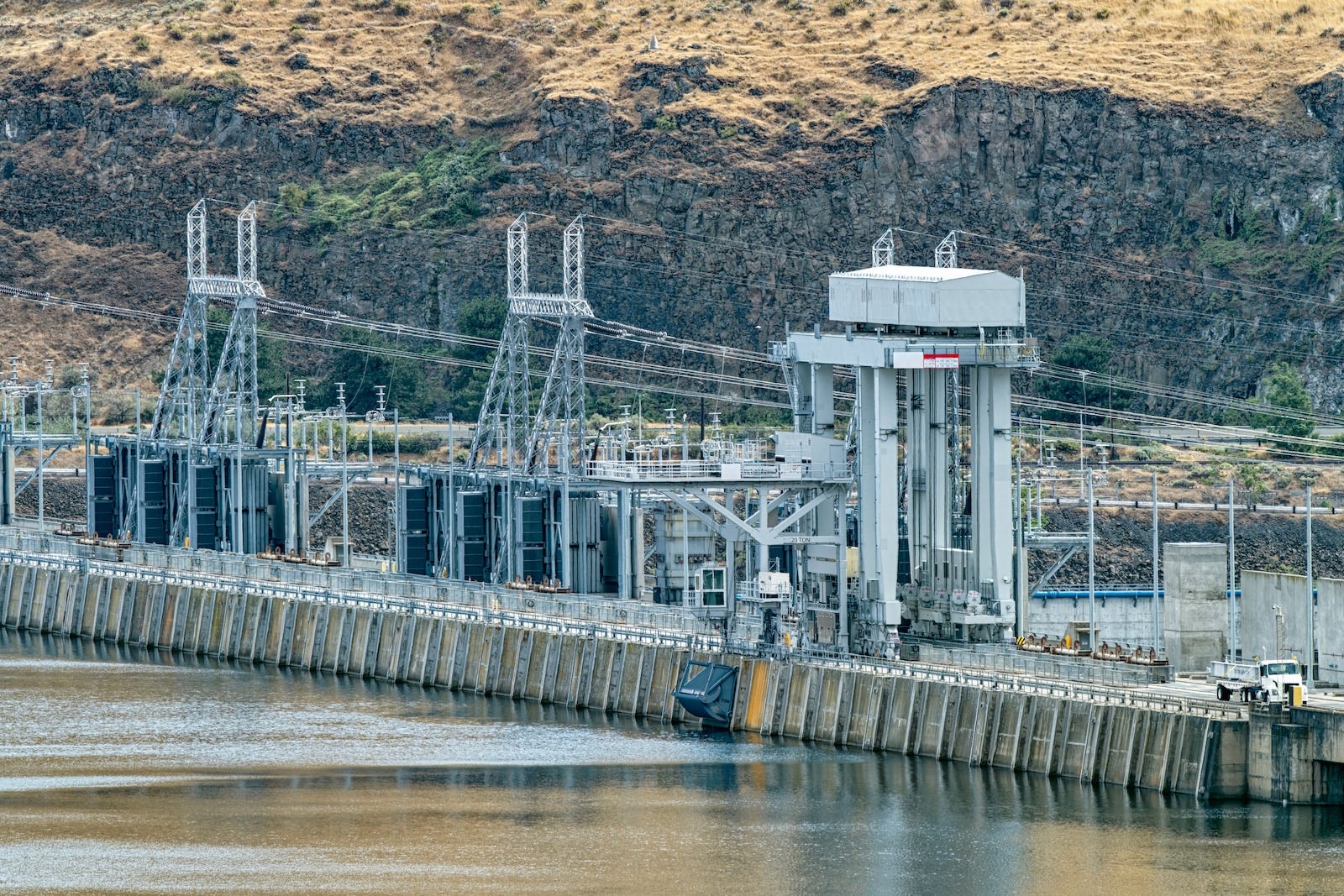
Dam re-certifications illustrate the stakes. FERC hydroelectric dam licenses last 50 years. If states lose Section 401 review authority over dams, they could be locked out of protecting their waters for half a century. Take the Conowingo Dam on the Susquehanna River, which feeds the Chesapeake Bay. When heavy storms flush accumulated sediment downstream, it can carry large loads of nutrients and pollutants into the Bay, threatening the Bay’s ecology, its fisheries, and the local economies they support. Section 401 played a key role giving Maryland the leverage it needed to protect the people and industries that depend on the Bay.
A mutually agreeable outcome may not require the aggressive reform proposals in some House legislation. We could keep Section 401’s review authority largely intact, but specify what it is and is not allowed to consider when applied to pipelines. Negotiators could decide that Section 401 certifications may not consider climate change, noise, traffic, and other impacts that don’t connect directly to water quality. That would be mostly consistent with the Biden administration’s 2023 rule, which tried to focus review on water quality impacts. (The 2023 rule arguably left room for states to link climate impacts to water quality through attenuated causal chains. But that question wasn’t settled before EPA’s latest regulatory revisions.) Sedimentation, turbidity, and direct ecological disturbance to water bodies could be kept in scope.
Republican negotiators may worry that states could use water quality issues as a pretext to block projects. To try to solve that, statutory revisions could require states to identify the specific water-quality standard at issue. Lawmakers could also require state certification if mitigation measures are available to resolve the violation, or if a mitigation could provide comparable ecological protection.
To ensure dam certifications receive Section 401 review, Congress could clarify in statute that dam flows count as “discharges.” This would make explicit what the Supreme Court has already held. This way, narrowing pipeline review doesn’t inadvertently gut other key equities.
Other proposals would tighten the certification timeline or limit repeated application withdrawals. Yet, there are surprisingly thorny problems with timeline reforms. Under current law, it’s possible to get around the one-year time limit if a sponsor withdraws and re-submits their application. States and project sponsors, each for their own reasons, have used this procedural mechanism to extend the certification process. But this flexibility can be important to ensure a project sponsor provides a complete application, or if an iterative process for large infrastructure would work better.
Although some proposed timeline changes might be hard for Democrats to accept, there’s some cross-partisan agreement that the process shouldn’t extend indefinitely. The courts also agree. In Hoopa Valley Tribe v. FERC, the DC Circuit held that a coordinated, repeated withdrawal-and-resubmission scheme between a state and applicant could not be used to indefinitely avoid the statutory deadline. The trick may be finding mutually agreeable statutory language to enshrine meaningful limits.
The trade-off for Democrats shouldn’t be overstated. Federal methane regulations are likely to survive Trump-era deregulation. That will mitigate the climate impact of new pipelines, even if Section 401 is narrowed.
Section 401 for Powerlines?
Balanced Section 401 reform will likely be an essential chess move toward climate progress in permitting negotiations. Republicans and some Democrats both want faster and more predictable NEPA reviews, making NEPA an area of cross-party alignment. But Republicans want limits on Section 401. And Democrats want faster approval of transmission lines, which Republicans and their stakeholders have tended to resist in recent years. That tradeoff has quietly made Section 401 one of the central bargaining chips in the current permitting debate.
Governor Hochul’s 2023 approval of the NESE pipeline offers a template, even if it’s an uncomfortable one for pipeline opponents. In the final decision, the many water quality concerns that New York’s environmental agency had cited in its earlier denials were either mitigated through project modifications or assessed to be compliant with applicable standards. Water quality received a review, and the pipeline survived it. Environmental groups are suing. But if it gets built, the pipeline could help give New York the “breathing room” it needs to pursue climate policy going forward.
In chess, pawn trades make sense if they open the board for something more important. Section 401 may represent that kind of trade in the politics of permitting reform. Limiting how states use the provision against pipelines would not end the Pipeline Wars. But it could remove one of the obstacles standing between Congress and a broader permitting package, including NEPA reforms and the transmission buildout the energy transition requires.
Otherwise Section 401 will remain a proxy battlefield in the Pipeline Wars while climate progress stalls.

Good analyses. I was surprised to learn from MIT's Charles Forsberg about the tradeoff between electric transmission lines and natural gas pipelines. It's cheaper to build a long pipeline for natural gas to be burned for electricity near the point of use, than to build an electric transmission line to carry electricity that long distance.
Even better is to encourage the construction of low cost nuclear power plants at cities and other points of use, to reduce grid costs and grid vulnerabilities. We must focus on changing rules and letting engineers design modern LOW COST nuclear power plants. Today's nuclear hype bubble is driven by cash-rich AI competitors who will pay anything for ample, reliable power, driving costs UP.