

The New Nuclear Story: Who, What, Where, When, Why, and How
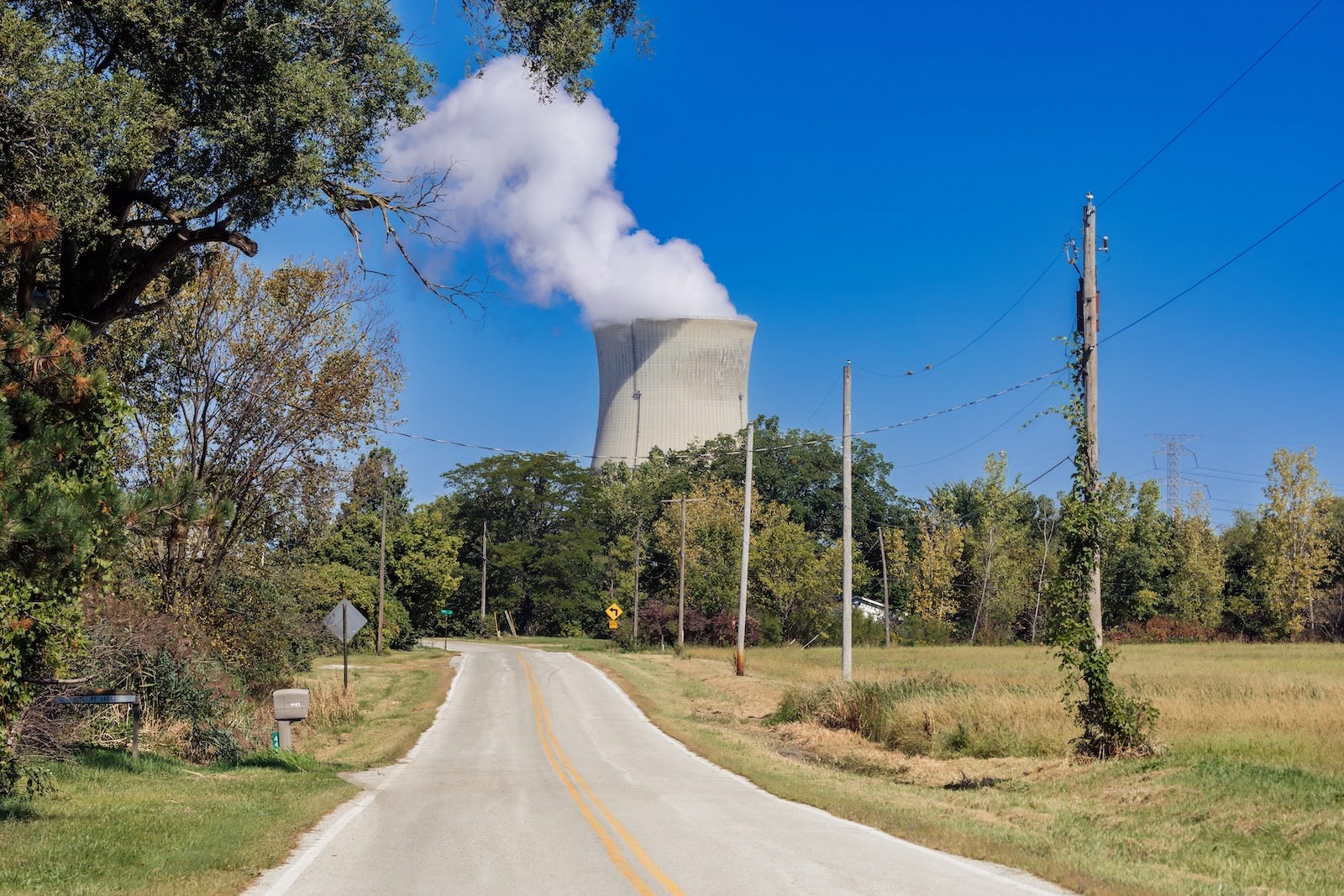
Bulldozers are already pushing dirt, welders are connecting steel reinforcing bars, concrete mixers are spinning, electricity customers are signing mega-deals for power from reactors for decades into the future, and billions of dollars of construction is already underway for a nuclear resurgence. It looks a bit like a replay of the 1970s and 1980s.
But it isn’t. People understand that a nuclear resurgence means new reactors, but that doesn’t describe how radically different this round will be.
In the construction campaign that built the fleet we have now, there were essentially two choices: buy a reactor that boils water, or one that heats it without boiling. Make it as big as you can. And the choices were made by traditional utilities.
Now a new cast of players is poised to be builders and owners, almost any size is possible, and the medium being heated may not be water.
The who, what, where, when, how and even the why of nuclear have changed. Here is a rundown of the key elements of a nuclear resurgence, in the first quarter of 2026.
Who
Anybody who wants to.
The current fleet was all built by utilities, mostly investor-owned but some public power agencies. They contracted with reactor suppliers and with architect-engineers who actually put the pieces together. But with the possible exception of the Tennessee Valley Authority, the utilities have been slow to embrace a new round of reactors, advanced or otherwise. Three likely alternatives are emerging:
Build a Reactor for a Particular User
Dow is working with a start-up, X-energy, on a high temperature gas reactor that will replace a steam production plant that serves a Dow chemical factory in Seadrift, Texas. Dow has financial resources and extensive construction experience, complementing X-energy, which has the engineering and design smarts. The plan is for a quartet of small reactors, each producing about 80 megawatts of electricity, or 200 megawatts of thermal energy.
Amazon also wants electricity. It has financial resources but isn’t known for its expertise in industrial construction. So Amazon is investing in X-energy, allowing X-energy to build a cluster of reactors that will be run by a nuclear utility, Energy Northwest. Google also wants clean energy and is following a slightly more hands-off strategy: it has committed to buying electricity from a fleet of reactors to be built by Kairos Power. Google will not be the builder, but will be essential to the project.
At the other end of the size spectrum, Oklo, a Silicon Valley start-up, plans to build, own and operate its small reactors around the country, serving a data center or an industrial user, not the grid as a whole. The Aurora Powerhouse reactor would provide electricity and, if the market wants it, industrial heat. The departure from the current business model is substantial. Rather than a utility ordering the parts, hiring a contractor and building its plant, this would represent a customer hiring a contractor to provide a service. It’s as if Frigidaire not only built your refrigerator/freezer, but installed it in your kitchen, owned it, and billed you for keeping your beer cold.
Something like that business model might work for the biggest reactors too. Fermi America, another start-up, wants to build a gigantic data farm in Amarillo, Texas, with four Westinghouse AP1000 reactors. That would make it a kind of energy park, of a sort not seen since the early 1800s, when companies in the New England hills built dams that provided mechanical power, and later electricity, to clusters of factories. In advance of President Trump’s recent trip to South Korea, Fermi America signed agreements with a company there, Doosan Enerbility, to start producing long lead-time components for the AP1000s.
Build A Reactor and Sell It to a Utility.
TerraPower, a start-up backed by Bill Gates and other tech moguls, is building the Natrium reactor in Kemmerer, Wyoming, using another new business model. Nearly all utility-owned power plants were made from parts ordered from a supplier, and built on a utility-owned site by contractors working for the utility. But utilities are nervous about building a first-of-a-kind reactor because they are not sure what it will cost or when it will be done. TerraPower plans to sell Natrium to PacifiCorp when the plant is finished, although the price has not been publicly disclosed.
Build A Reactor and Sell It to a Non-Traditional user
Several companies are working on micro-reactors, some of which produce only a megawatt or two, for small towns that are off the grid, remote mining operations, or enterprises with a strong need for reliable, in-house generation. These are replacements for diesel generators, which are generally reliable if you can be assured of a supply of diesel.
President Trump’s executive orders of May 23, 2025 called for such a reactor at a domestic military base by Sept. 30, 2028. The military wants a reactor that can be brought in by truck or cargo plane, set up in a day or two, and moved again after it’s been shut down for a few days. Civilian users may not need the “transportable” model.
There are details to work out. The Nuclear Regulatory Commission imposes minimum financial qualifications on reactor owners. And current reactors have a ten-mile emergency planning zone, a burden that would be impractical for micro-reactors. The Commission has already accepted the idea that the size of the zone should be tailored to the release potential of the reactor, but how this will play out with the smallest units is not yet clear.
What
The reactors will split atoms to make heat. Beyond that, the details will vary a lot.
With the promise of investment money from Japan, and interest from some utilities and non-utilities, it seems likely that some Westinghouse AP1000 reactors will be built. In gross outline, these resemble the large light-water reactors operating today, but they have various refinements intended to make them passively safe, relying on gravity and natural heat dissipation in place of many of the pumps, valves and pipes needed in current designs.
Westinghouse has also designed an SMR, the AP300, but it has not attracted much commercial interest so far. That, too, could be built.
NuScale Power has a design, already licensed by the Nuclear Regulatory Commission, that uses fuel and ordinary water much the way that present-day pressurized water reactors like those built by Westinghouse do. But they are only one-fifteenth the size of a full-scale pressurized water reactor, which allows vastly simplified safety systems. NuScale is following yet another new business model: it has a partner, ENTRA1 Energy, that is supposed to build, own and operate NuScale reactors. That model got an endorsement in the “framework agreement” on investments announced in Japan by President Trump, which includes up to $25 billion in financing for ENTRA1
In addition to the Natrium and X-energy reactors, described above, Kairos Power is building a series of test reactors that will use a fuel that is highly resistant to heat, pebble-type fuel, in a coolant that is also highly resistant to heat, a mix of two salts, lithium fluoride and beryllium fluoride. The reactors will run at very high temperatures but low pressures.
There are other possible entrants; for example, Holtec International, which has extensive experience building dry casks for fuel storage, and some nuclear power plant components, has a design for a small modular reactor, and has at least two sites where it might build.
Where
There are four particular sites where reactors are likely to be built soon, and some clues to what regions will host those that follow.
The Department of Energy’s Advanced Reactor Demonstration Program has promised $1.6 billion to each of two projects: X-energy’s Xe-100 reactors for Dow in Seadrift, Texas, and TerraPower’s Natrium plant in Kemmerer, Wyoming. Construction work has already begun on the non-nuclear portion of the Wyoming project.
Kairos Power is building its test reactors in East Tennessee at an old Atomic Energy Commission site, and Oklo has broken ground at the Idaho National Laboratory.
Ontario Power Generation is building a GE-Hitachi BWRX, a 300 megawatt SMR, on the shore of Lake Ontario. The TVA says it will build one at the Clinch River site, in Oak Ridge, Tennessee.
Governor Kathy Hochul of New York has ordered her state’s Power Authority to develop plans for 1,000 megawatts of new generation, leaving the technology and business model to be decided later. But the location could easily be on Lake Ontario.
And there are scores of places where coal plants are retiring. These have grid connections, cooling water, rail and road access for delivering components, and, in many cases, powerplant work forces that need new jobs. There are also scores of places that are highly dependent on reliable electricity, and would pay a premium for micro-reactors to replace diesel generators.
Generically speaking, no company is likely to risk building a reactor as a “merchant plant,” one that makes its money by selling its output and its capacity in a competitive market, until the cost and schedule of reactors is established. So the early reactors are likely to be in traditionally-regulated regions where decisions are made by public service commissions, not “deregulated” regions where short-term market considerations hold sway. That means the southeastern United States, and the West. Reactors built to be connected to particular customers, and not the grid as a whole, could be built in other places. Georgia and the Carolinas are among the candidates.
When
When Congress approved the Advanced Reactor Demonstration Program, in 2020, the reactors were supposed to be built in five to seven years, but among the difficulties was getting the Energy Department to pick which projects to back.
Construction of the Dow/X-energy plant is supposed to start next year and construction will be finished by 2030. TerraPower said in July that it, too, would be finished in 2030. Both would benefit by the order from President Trump to have the NRC speed up its reviews. But both are first-of-a-kind projects, and thus at risk of delays.
Oklo says that its first small reactor will be running by late 2027 or early 2028, but it is at an earlier stage of licensing.
President Trump’s executive orders demand that the Department of Energy get at least three advanced reactors running by July 4, 2026. That schedule was very ambitious when it was announced in May, 2025, but the government shutdown that lasted from October 1 until November 12 has made it even more so. And the goal is “initial criticality,” or first chain reaction, not full operation, and not in commercial reactors. Oklo’s could be one of those reactors.
Why
The reactors running today were built by companies that thought they would be more economical than coal or oil, or at least a good way to hedge the bet.
For the last few years, the motivation for new nuclear reactors has been reducing greenhouse gases. That is still the case for some projects, although some of the utilities that pledged to cut their net emissions to zero by mid-century have backed off under the Trump administration.
There is an ideological factor, about making America great again. There is also a growing realization that intermittent renewables can make limited contributions, because they have high associated costs and are difficult to integrate.
Two other factors are prominent. One is that although overall electricity demand has not changed radically in recent years, there are predictions, widely believed, that data farms will require enormous amounts of electricity in the years to come. This is true, although the extent is uncertain. And the other is a traditional goal of energy planners: diversity in the generation mix, so that price spikes or supply problems for fossil fuels, droughts in water or wind, or other unusual but anticipated events, will not cripple their systems.
How
Successful buildout of the next wave of nuclear reactors will rely on a greater emphasis on available parts, an accelerated regulatory structure including cooperation with regulators in other countries, a global supply chain (Korea, Japan), and reduced need for heavy forgings.
GE-Hitachi, for example, is offering a 300 megawatt small modular reactor in which it boasts that 90 percent of the parts are already in use in the industry. NuScale stresses that the fuel it uses is nearly identical to what Westinghouse already makes for pressurized water reactors. And NuScale has attracted a group of suppliers that have also invested in the company, giving them a greater stake in its success.
NuScale and other SMR makers stress that much of the work on their models can be done in a factory. The NuScale module, for example, comprises three factory-built parts.
Factory fabrication offers promise in theory but it takes skill to make it work. Georgia Power discovered when it built Vogtle 3 and 4, which are AP1000 units, that the company subcontracted to pre-fabricate major modules wasn’t familiar with nuclear quality control requirements. The parts came late and without the required paperwork.
And some advanced reactors may be easier to build than the water-based models now in service. Kairos Power is developing a commercial version of a molten salt reactor, which operates at near atmospheric pressure. For a test reactor, it built its own reactor vessel, something that legacy reactor manufacturers could not do because the vessel has to withstand more than 1,000 pounds of pressure per square inch, and in some models more than 2,000 pounds.
Buildout in the U.S. will also require a Nuclear Regulatory Commission that has been successfully reformed to match its updated mission statement. In January 2025, the NRC approved the updated mission statement provided by the ADVANCE Act, which pressed the Commission to include the societal benefits of nuclear technology as part of its licensing process. While this is a significant step forward, far more reform is needed for the NRC to live up to its improved mission statement. Currently there is bipartisan pressure on the Commission to modernize and license new nuclear reactors much more promptly.
Will The Nuclear Resurgence Be Successful?
Success will be measured along a spectrum. Some new reactors will be built, and if all goes well, they will be a model for scores of others to follow. But that is far from certain.
There are several ways for the nuclear buildout to go wrong. Construction of first-of-a-kind models could take so long and be so far over budget that nobody wants to go next. Few companies could survive the kind of cost overruns that Southern Company saw on its Vogtle project near Augusta, Georgia.
In the past, some reactor concepts have reached the prototype stage but simply not worked very well, and commercial pressures have led to the ideas being junked in lieu of tried-and-true technology. That kind of failure is an option.
A reactor somewhere could suffer a mishap that scares the public. The Three Mile Island unit 2 accident of March 1979, which is beyond the memory of most people, did just that. In round numbers, it turned a billion-dollar reactor into a billion-dollar liability, but it did not hurt any member of the public or reactor staff. But it contributed to a lull in reactor orders, because of public fear and because it triggered new NRC requirements. That particular accident won’t happen again. It is not likely that some other kind of accident will wreck a reactor, but it is not impossible. And whatever incident happens will become a Rorschach test for wavering members of the public. In December 2015, bird droppings shorted out a transformer at the Indian Point plant, something that happens intermittently to nuclear and non-nuclear generating stations from time to time, and the governor of New York cited it as a reason to retire the plant.
Nuclear plants operate on something resembling a one-strike-and-you’re-out principle.
Another factor, perhaps more likely, is that the demand for electricity might not expand as expected. Artificial Intelligence and data centers might not turn out to be quite as huge as some people expected. Shocks in the fossil fuel market or other causes could lead to a recession that depresses electric demand. Another pandemic could do the same.
And almost certainly, there are more reactor models in development than the market will sustain.
And there is a risk from competition. A nuclear resurgence was brewing around 2010, because natural gas was at $16 a million BTU, and suddenly nuclear looked cheap. But along came fracking and the cost of gas collapsed, along with the price of energy on the wholesale grid. The effect was so severe that it killed several reactors.
There are other technologies that could derail a buildout. Lithium-ion batteries could be made obsolete by something better, just as lithium replaced nickel metal hydride, which replaced nickel cadmium. Or someone could invent an effective way to capture carbon from fossil fuel burning.
None of these developments is likely enough to delay a full-court press towards advanced nuclear energy. But when Yogi Berra said that it was tough to make predictions, especially about the future, he might well have been referring to energy technology.
 | A guest post by
|