

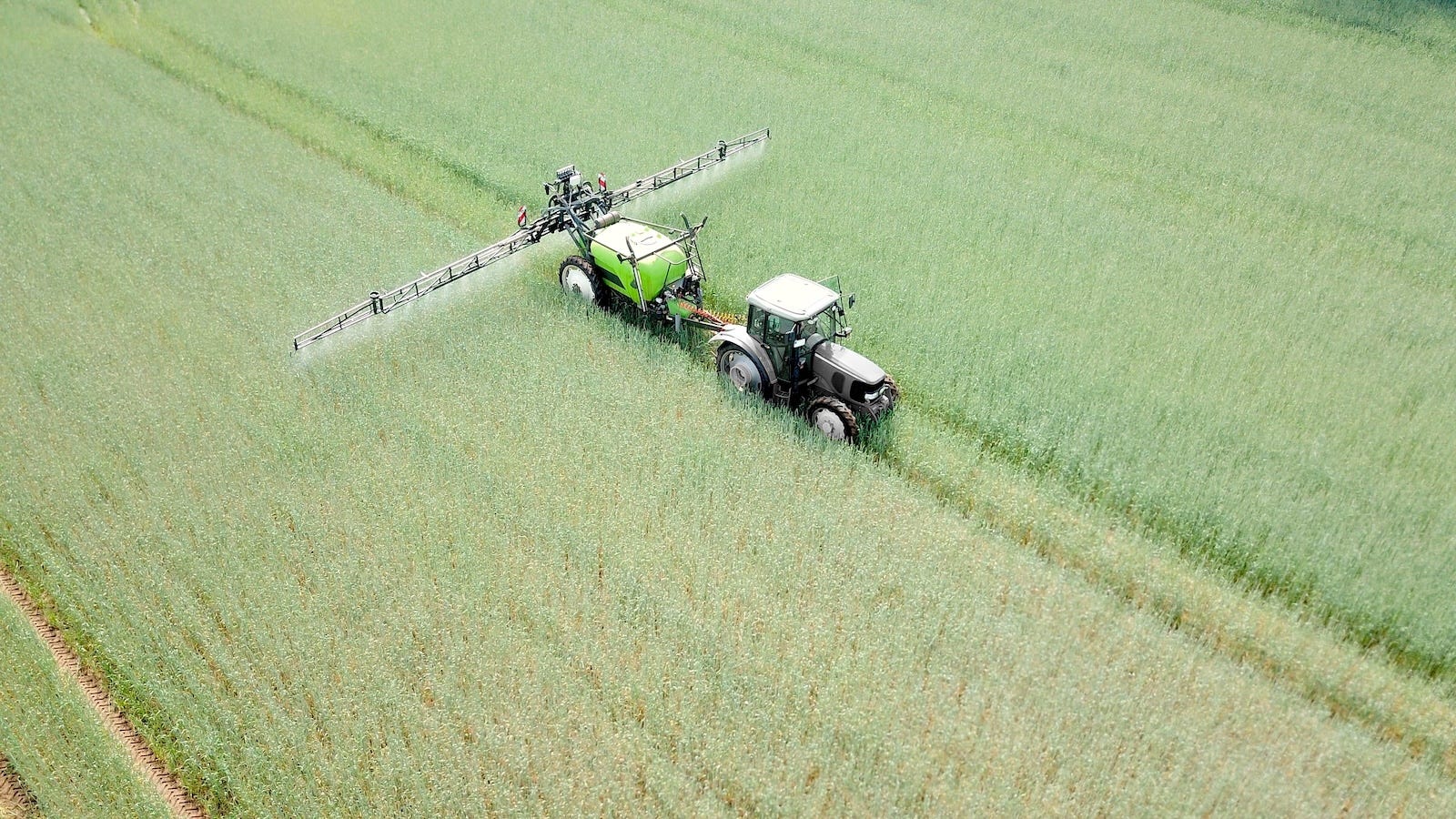
2026 is set to be a pivotal year for the fate of glyphosate, the active ingredient in Roundup and other weed-killing pesticides used by farmers. The U.S. Congress, the Environmental Protection Agency (EPA), and state legislatures are all set to consider changes to pesticide policy this year. Meanwhile, the U.S. Supreme Court is currently considering whether to take up Monsanto Co. v. Durnell, which, if decided, could dramatically reshape the national debate over glyphosate and pesticide regulation.
As a backdrop to these forthcoming decisions, the only manufacturer of glyphosate in the United States, Bayer, is embroiled in tens of thousands of lawsuits alleging links between exposure to the herbicide and cancer. The wave of litigation, relentless since Bayer acquired Monsanto in 2018, is costing the company. Bayer’s CEO recently warned they could be forced to pull glyphosate off the market if litigation isn’t contained this year. Such a move would affect more than 90% of the corn, soy, and cotton grown in the U.S.
Decades of independent research and evaluations by regulatory agencies have continued to assert that glyphosate is safe when used as directed and has had a positive net contribution to social welfare. Glyphosate-based products are licensed for use in over 100 countries. Here in the U.S., the EPA maintains that glyphosate does not cause cancer—and crucially, has approved the Roundup label without a cancer warning. And yet, juries in federal courts have repeatedly sided with plaintiffs claiming Bayer failed to warn consumers of cancer risk under various state laws. A legal split has emerged in federal courts over whether failure-to-warn claims brought under state law should be preempted or blocked by federal law and EPA’s labeling requirements. In response, state legislatures have taken matters into their own hands. As this trend continues, a growing patchwork of pesticide labeling laws and exposure of companies to legal liability threatens to make American farmers’ zipcodes the biggest predictor of what seeds and inputs are used on their operations.
To avoid this eventuality, the Supreme Court should opt to take up the glyphosate case. A decision clarifying whether the Federal Insecticide, Fungicide, and Rodenticide Act (FIFRA), the primary federal law regulating pesticides, definitively preempts failure-to-warn claims brought under state law is long overdue and in the best interest of American agriculture.
Status Quo Expected from Congress and Federal Government
Neither EPA nor the U.S. Congress are likely to disrupt the use of glyphosate in the U.S. this year, making the Supreme Court’s decision even more consequential.
The Environmental Protection Agency (EPA), which reviews pesticide registrations every 15 years, is due to complete an updated human health risk assessment for glyphosate in 2026. A scientific journal’s retraction of a single 25 year old glyphosate safety study is pouring gas on public calls for the government to revoke glyphosate’s registration. However, EPA’s review of a preponderance of scientific evidence is expected to reassert glyphosate’s safety for humans and limited ecological impacts, and to approve new label changes that help mitigate risks like spray drift and herbicide resistance.
That EPA resisted bending to Make American Healthy Again interests in 2025 further signals the likelihood that the agency will stick to a science-based review of glyphosate. For example, in 2025, despite several court rulings banning previous dicamba registrations and risking the outrage of anti-pesticide interest groups, EPA announced plans to register 3 new dicamba herbicides for use on genetically modified cotton and soybeans with new restrictions to be included on the product labels.
Despite speculation that FDA, under the leadership of Robert F. Kennedy Jr., could wield its jurisdiction over pesticide residue limits to discourage glyphosate’s use on food grade crops, FDA is expected to maintain the status quo. FDA’s deputy commissioner for human foods, Kyle Diamantas, has been extremely deferential to EPA, emphasizing it is not up to FDA to shape policy on pesticides. FDA released new data from their regular residue monitoring program at the close of 2025 showing over 97% of domestic human food products tested under EPA’s tolerance limits for pesticide residues, continuing a trend consistent with past years. Further, the latest data from USDA’s pesticide data program found 99 percent of samples from 19 commodities of fresh and processed fruits and vegetables, nuts and fish had pesticide residues below benchmarks set by EPA.
Congress, in theory, could change the landscape of pesticide use through meaningful changes to FIFRA. Lawmakers could also affect pesticide manufacturers’ legal liability. Leaders in the House of Representatives, like Chairman of the Agriculture Committee G.T. Thompson, have been vocal proponents of passing pesticide labeling language that emphasizes individual states cannot require pesticide labels to go beyond labeling requirements put forward by the EPA.
However, Congress will struggle to pass a new farm bill this year, the likely vehicle for any such changes. Further, a separate attempt to add pesticide labeling language to this year’s budget bill for EPA failed. With business as usual expected from the Feds, states legislatures have a stronger chance to usher in a new era of pesticide policy this year.
State Legislatures to Watch Instead
Diverging court decisions in different districts and a growing divergence in state-level laws are creating a growing patchwork of pesticide labeling requirements across states. In response, Bayer, other pesticide manufactures, and agriculture groups are backing state legislation to affirm states stay in lock step with EPA.
Debate over state-level legislation is expected to dominate the first half of the year with neither Bayer nor its detractors willing to wait out a Supreme Court decision. North Dakota and Georgia have already passed laws affirming that EPA-approved labels for pesticides are sufficient and that manufacturers cannot be held liable for failing to warn consumers of health risks above and beyond those required by the EPA. The states still retain the right to regulate the sale and use of individual pesticides within state bounds, and the Georgia law specifically emphasizes that manufacturers can still be held liable in instances of corporate misconduct, including if a company knowingly withheld, concealed, misrepresented, or destroyed material information regarding human health risks to obtain or maintain a pesticide’s registration.
Simultaneously, MAHA oriented groups and long time opponents to industrial agriculture, like Center for Food Safety, are supporting efforts that allow states and local governments to implement warnings or restrictions that go beyond federal standards. Debate over pesticide legislation is expected to heat up in states like Missouri, historical home to Monsanto, where many cases over glyphosate have been filed, and Iowa, where MAHA interests are not only pushing legislation but also backing a GOP candidate for governor.
Regardless of what you think about glyphosate or dicamba or any other active ingredient, this precedent sets up a future where a range of crop protection tools and chemistries are subject to wildly different legal risks and labeling requirements in different states. This could reasonably lead to companies deciding to sell certain pesticides in, say, North Dakota but not South Dakota—a terrible idea in a time when U.S. farmers in every state are trying to keep input costs low as they compete with farmers from Brazil and elsewhere. Growing decisions should be guided by factors like weather and soil conditions, market opportunities, and yield potential. Instead, a patchwork of state laws will drive a future where growing decisions, and yield gains, are limited by the types of seeds and inputs available by state.
Waiting on the Supreme Court
Should the Supreme Court opt to take up Monsanto Co. v. Durnell, the justices will clarify whether FIFRA preempts state-law failure-to-warn claims where the EPA has repeatedly concluded that a cancer warning is not required.
The Trump administration weighed in on Bayer’s side, asserting that the federal law invalidates the state-level lawsuits alleging the company’s product was responsible for causing cancer. In a brief filed by the U.S. Solicitor General, the administration argues that the Missouri Court of Appeals—which upheld a $1.25 million verdict for plaintiff John Durnell—was incorrect, as allowing state juries to impose liability undermines the EPA’s consistent, science-based reviews of glyphosate.
A ruling in Bayer’s favor would dramatically reshape the national debate over glyphosate and pesticide regulation. If the Supreme Court finds that federal labeling requirements preempt state-law failure-to-warn claims, it could effectively end thousands of pending Roundup lawsuits nationwide, removing the existential threat of litigation for Bayer (at least regarding their labels).
On the other hand, if the Supreme Court rules in favor of the plaintiff, Bayer and other pesticide manufacturers will continue to be held liable over failure-to-warn claims. In turn, this could prompt companies to eat the cost of changing their product labels to comply with an array of state by state requirements or even spur Congress to write a new uniformity provision in FIFRA that even more clearly delineates EPA’s sole authority over national pesticide labeling.
The Stakes for Glyphosate, Farmers, and Policy Uncertainty
With federal agencies and the U.S. Congress set to maintain the status quo, the real threat to glyphosate’s future lies in the burgeoning patchwork of state laws. By failing to hear this case, the Supreme Court would leave the door open to consider future cases on the topic of pesticide preemption. Bayer will continue to defer to previous guidance from EPA that the company cannot use labels with warnings EPA has not approved. Some states will seek to follow in North Dakota and Georgia’s footsteps to limit manufacturer liability, while others seek to implement warnings that exceed federal standards. This divergence will create prolonged policy uncertainty and a fractured market where farmers’ access to inputs are limited by state lines.
The stakes for the future of glyphosate-based herbicides can’t be overstated. If the Supreme Court leaves this matter to play out in states, either by opting to not hear the Monsanto Co. v. Durnell case at all or by ruling in favor of Durnell, the resulting legal and regulatory volatility could become untenable for Bayer and force glyphosate off the market. This would burden U.S. corn and soy farmers, in particular, with an estimated $1.5 billion in annual costs. It would also reverse decades of yield gains and no-till conservation efforts meant to slow soil erosion. Instead of turning to mechanical tillage, replacing glyphosate with older herbicide alternatives is more expensive and comes with its own risks. Alternatives like dicamba often drift to neighboring fields and pose higher risks to aquatic species and non-target plants while others like paraquat are far more toxic than glyphosate.
Today’s legal gridlock serves no one. By taking up Monsanto Co. v. Durnell, the Supreme Court can provide a definitive ruling on whether FIFRA preempts state-law failure-to-warn claims and blunt the chaos that comes with an array of state-level mandates.

I hope science prevails.