

President Trump entered his second term with the backing of the American farmer, but his administration’s agriculture and trade policies are now fueling a wave of rural frustration. In 2025, U.S. producers delivered one of the largest soybean harvests in history and corn production is set to hit record highs in 2026 with a third consecutive year of yield gains. Yet, many of Trump’s agriculture and trade policies are stifling growth and profitability. The administration ignited another trade war with China, disproportionately hurting soybean growers, and unveiled a plan to increase U.S. imports of Argentine beef, sparking intense backlash from American ranchers. Meanwhile, trade negotiators have failed to make meaningful progress opening new export markets abroad.
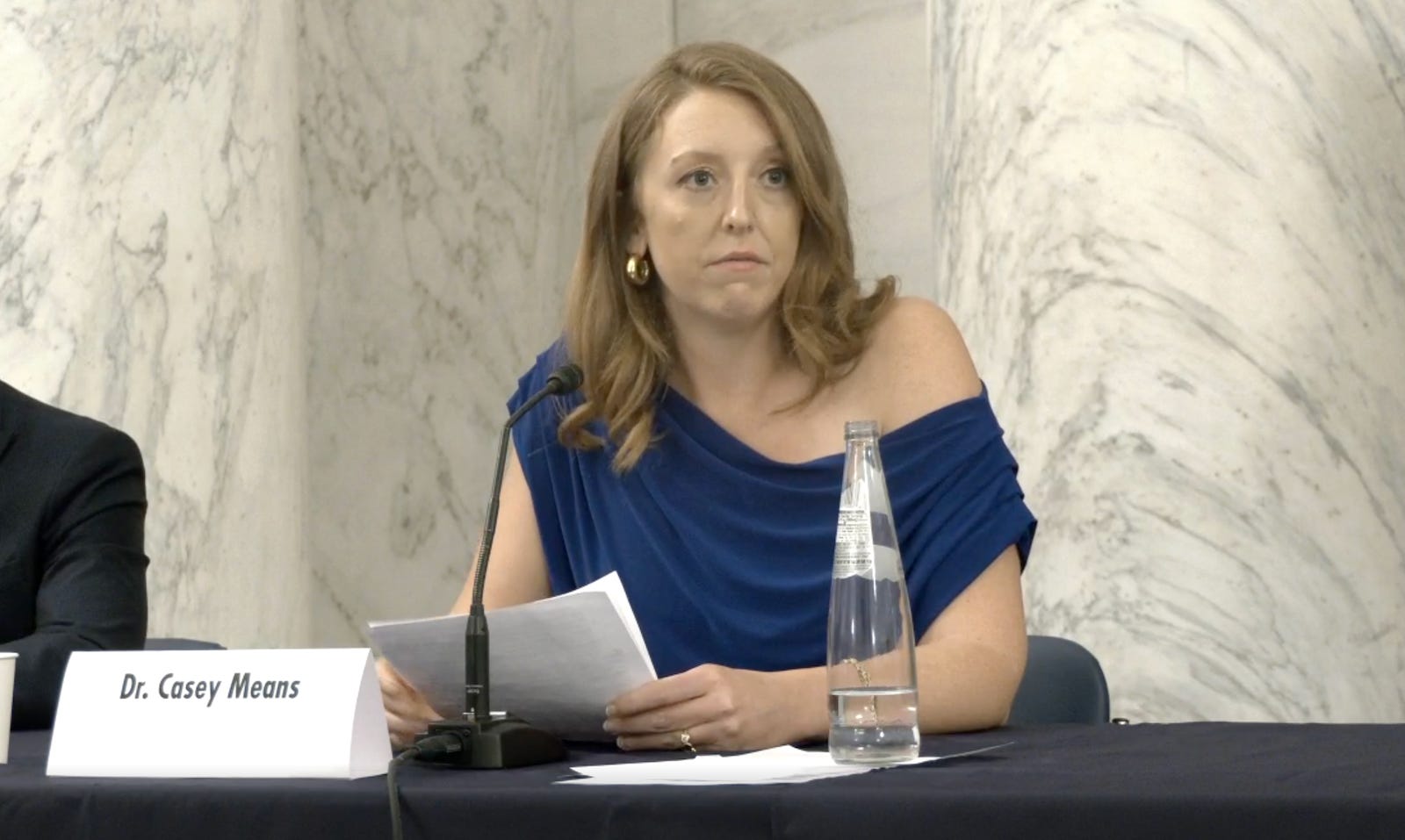
As frustrations rise within President Trump’s rural base, Republicans in Congress are about to confirm yet another Trump-nominated anti-farmer political figure: Dr. Casey Means as U.S. Surgeon General. Her nomination exposes a glaring contradiction within an administration promising to revitalize American agriculture while elevating voices hostile to its essential tools.
During her appearance before the Senate Health, Education, Labor and Pensions (HELP) Committee this week, Dr. Means will field questions regarding her medical credentials, potential conflicts of interest, and views on vaccines. Despite several farm-state Senators sitting on the HELP committee, the wellness influencer’s skepticism toward modern agriculture is expected to receive less attention.
The Senate has an opportunity to pressure-test Means’ doubts about the innovations used widely in modern farming, such as pesticides, precision technologies, and new crop varieties. Confirming Dr. Means risks advancing a vision of food and farming that is divorced from scientific evidence, dismissive of farmers’ livelihoods, and inconsistent with the goal of making healthy food affordable for every household.
The Food Philosophy of Dr. Means
In her newsletter, media appearances, and book (co-authored by Calley Means, her brother and an adviser to Robert F. Kennedy Jr.), Dr. Means espouses views on food and agriculture that sharply diverge from scientific consensus and are at odds with U.S. agriculture. Namely, she advocates for the wholesale rejection of industrial agriculture, links conventional farming practices to health risks, and questions the safety of genetically modified crops.
Specifically, Dr. Means has called for farmers to stop using synthetic pesticides, claiming that a move away from these tools would be “the SINGLE most effective strategy” to solve major health and environmental challenges. No major scientific or health institution supports this claim. Dietary exposure to pesticide residues in food remains well below EPA-established safety limits. Synthetic pesticides are tightly regulated by the EPA and subject to rigorous risk assessments. Moreover, they are integral to maintaining yields amid growing pest pressures; eliminating their use would raise food prices, especially for fruits and vegetables.
In podcast interviews as recent as last year, Dr. Means questioned the safety of genetically engineered (GE) crops, especially those tolerant to glyphosate, despite decades of scientific review affirming their safety. The FDA, European Commission, and U.S. National Academy of Sciences all conclude that approved GE crops are as safe to eat and as nutritious as other crops. Furthermore, analyses show that genetically engineered crops enable farmers to use less toxic pesticides, increase farm profitability, and cut greenhouse gas emissions by boosting yields and limiting land conversion.
In her book Good Energy, Dr. Means tells readers to avoid conventionally grown foods, claiming “industrial agriculture practices—like monocropping, tilling, pesticides, and factory farming of animals—lead to vastly fewer nutrients.” This assertion is not supported by scientific evidence. Comprehensive reviews of hundreds of studies have found no consistent vitamin or mineral content differences between organic and conventionally grown foods. Meta-analyses demonstrate that nutrient density is driven far more by crop variety, soil type, and storage practices than by farming methods. Industrial agriculture has, in fact, made food more abundant, affordable, and safe for more Americans. Researchers also project that increasing demand for organic food would reduce overall consumption of fruits and vegetables.
It’s clear that Dr. Means’ focus on personalized wellness and nutrition appeals to a segment of the public already distrustful of industrial systems. By highlighting legitimate public health and disease trends that are cause for legitimate concern and action, she needlessly sows fear and distrust in our food supply. By promoting speculative claims that agricultural inputs like pesticides are poisoning Americans and championing regenerative farming as a panacea, she ignores the reality that many Americans are struggling to access healthy foods as it is.
A Political and Policy Misalignment
If confirmed as Surgeon General, Dr. Means would wield significant influence over public attitudes and policies on diet, nutrition, and pesticides. Health Secretary Robert F. Kennedy Jr. said he expects that as Surgeon General, Means will “have a bully pulpit, and she can talk to moms about how to care for their kids, what kind of food to give them.” We expect her to continue advising Americans to avoid conventionally grown food. Appointing someone with this outlook to the highest levels of government undermines both public health and environmental goals. It lends legitimacy to a food and farming vision that rejects scientific evidence and is inconsistent with the goal of making healthy food even more affordable for every household. It is also dismissive of farmers’ needs and the importance of a profitable, globally competitive U.S. agriculture sector.
Dr. Means’ promotion of distrust in science-based regulations could spur farmers to adopt less productive practices requiring more land and resources. Her opposition to genetically modified crops is particularly troubling, given their historic contribution to yield growth and the need for continued productivity gains to sustain a planet of 8 billion people and counting without tearing down even more forest. A recent World Resources Institute report underscores this urgency: yield growth and livestock production efficiency must accelerate, not stagnate. Without transformative technological advances, global food systems will fail to meet climate and nutritional targets.
Dr. Means’ confirmation hearing follows White House efforts to reassure farmers—promising resumed soy purchases from China and extending direct financial relief to mitigate row crop losses. Appointing a health official that regularly rejects the science underpinning modern agriculture’s safety sends the wrong message amid trade disruptions, especially given that most farmers consider technology innovation to be crucial to their success.
MAHA (Still) Isn’t Going Anywhere
Since Robert F. Kennedy Jr. was installed as Health Secretary, the Trump administration’s agenda on health, agriculture, and technology has lacked coherence. And in nominating Dr. Means, President Trump doubles down on that incoherence. Confirming Casey Means is a lose-lose for Trump. Conservative agriculture leaders have warned that Dr. Means’ attacks on pesticides amount to fear mongering and risk hunger and economic turmoil. At the same time, the anti-vaccine flank of the MAHA movement doesn’t think she is extreme enough.
The MAHA movement isn’t going anywhere. Advocates led by Farm Action, United We Eat, and Moms Across America are petitioning Agriculture Secretary Brooke Rollins to incentivize organic and regenerative agriculture. These groups will likely look to Health Secretary Kennedy and Dr. Means, if confirmed, to escalate messaging promoting these policies through the Department of Health and Human Services. Last year, the USDA welcomed Dr. Ben Carson to lead the agency’s implementation of a Make America Healthy Again agenda. Meanwhile, the EPA continues to provide a counterbalance as they insist on the safety of the agency’s science-based regulatory processes and seek to speed up pesticide registration reviews.
Casey Means’ nomination highlights a fault line in American politics between those who trust technology and believe in growth, and those who fear both. Both Republicans and Democrats must confront this divide, and the Trump White House should not abandon technology in favor of ideology-driven agricultural policymaking. Whether one cares about the prosperity of American farmers, children’s access to affordable and healthy food, or the biodiversity of the world’s wild places, the answer is clear: the United States must continue to embrace the innovations—such as modern inputs, precision technologies, and new crop varieties—that enable farmers to produce more high quality food on less land and with fewer costly resources.
