

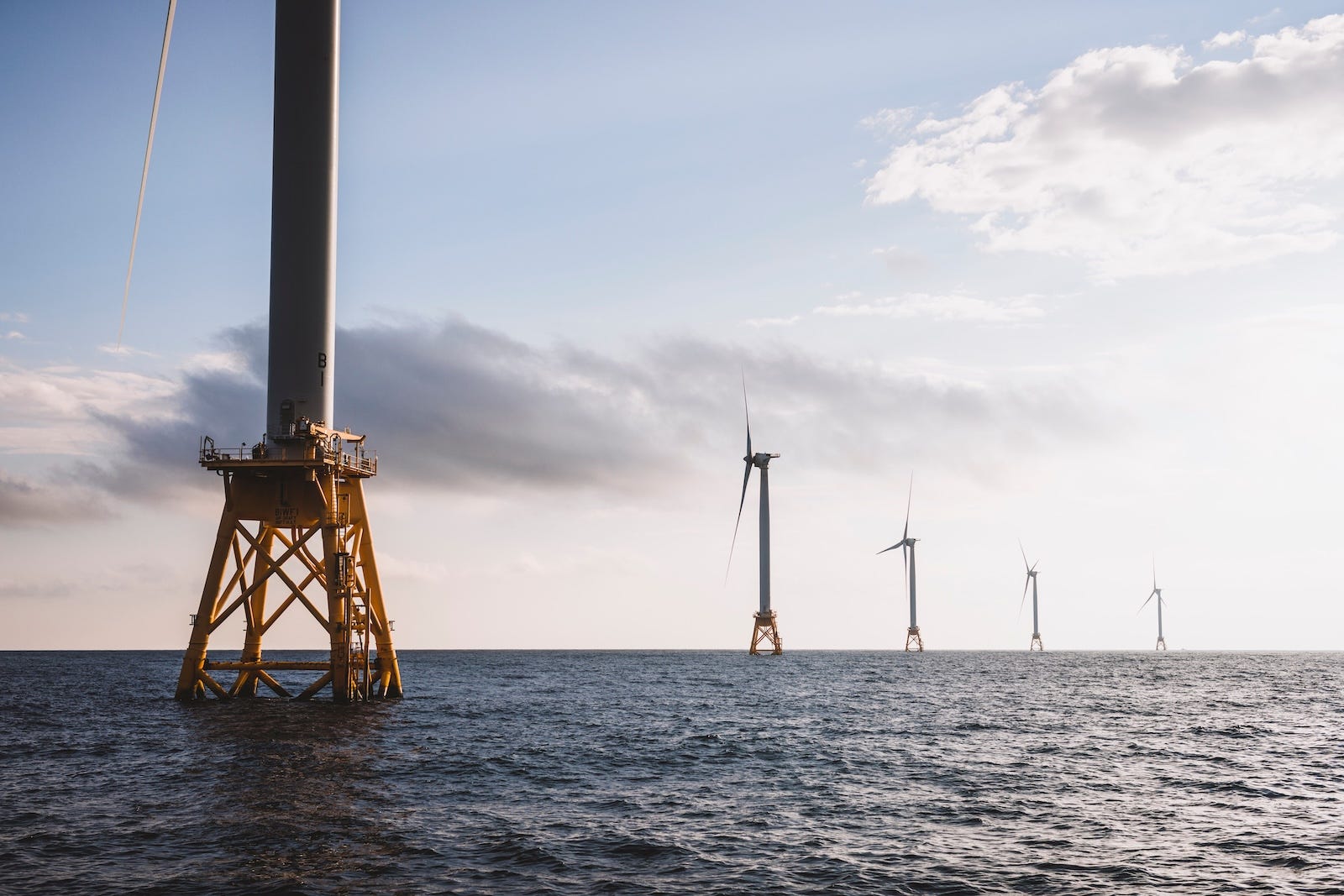
On December 22, 2025, the Trump administration dropped a bomb on congressional permitting reform talks. The Department of the Interior announced that it would immediately pause leases for five wind farms already under construction off the Atlantic coast. Interior’s order appeared first in a press release, which arrived days after a federal court struck down a similar order pausing offshore wind authorizations. But the collateral damage to permitting talks was immediate. Key Senate Democrats announced there would be no bipartisan talks on permitting reform unless the administration reverses the pause.
The permitting package is only part of what’s at stake. America isn’t just in danger of losing individual energy projects. America is in danger of hollowing out the value of federal government permits as legal and planning instruments. The costs of that collapse are likely as high as they are difficult to estimate. But the problem extends far beyond offshore wind. All federal energy authorizations exist at the mercy of each administration. Successive administrations—Democratic and Republican—have suspended leases, slow-walked reviews, introduced new regulatory hurdles, revoked approvals, or outright refused to act. The logic of reprisal has escalated the battle.
The annals of energy policy history suggest an imperfect path out of the trap. In 1978, amid an energy crisis, Congress passed provisions providing compensation to oil and gas leaseholders on the Outer Continental Shelf if the federal government cancelled their leases. Facing overlapping policy imperatives of similar magnitude today—energy supply and affordability, climate change, and whether federal permits can be relied on at all—we need to extend this protection to all federal approvals.
If a permittee has relied on a federal permit to make investment or other financial decisions, the compensation should kick in no matter what the government’s reasons are for interfering with the approval. And the clock for compensation should begin as soon as an approval is suspended. The only way the government would get its money back is if it can demonstrate to a fair arbiter that the holder of the approval materially violated the terms of the approval.
Some proposed solutions take an alternate path—requiring developers to sue for compensation in a newly created court process. But doing so requires injured permittees to take the government to court, a time-consuming process. And many developers have multiple projects in front of the federal government and may not want to sue and expose their other projects to authorities’ caprice. There’s also a legislative tactical drawback to establishing a new court process, which is that it would need to involve the Judiciary Committees. Congress is already wrestling across four committees of jurisdiction in current permitting reform negotiations. Adding more committees would make the challenging path to permitting reform much more difficult.
By contrast, compensating project sponsors who lose authorizations to which they’ve committed capital could avoid creating a new court process, avoiding Judiciary Committee jurisdiction. And if the compensation is automatic regardless of why the government interfered with the permit, permit recipients can be made whole without jeopardizing other projects or spending time and resources to recover their investments.
The compensation framework Congress adopted for oil and gas leases on the Outer Continental Shelf offers a valuable starting point. But the principle should not be confined to a single statute or sector. There is no reason that only some forms of federal permission should carry protection against political reversal. The same baseline stability should apply to all federal permits, rights-of-way, authorizations, and leases—that is, the core federal approvals needed to move a project forward—regardless of technology or location.
Extending compensation to discretionary or national security-based suspensions would not rewrite the permitting system; it would establish a technology-neutral rule: when a project proponent secures a federal approval and complies with its terms, the government should not be able nullify that approval, without compensation, simply because policy circumstances have shifted.
This is a drastic proposal to address drastic circumstances. The Democrats need ‘permitting certainty’ as part of a package of permitting reforms. Some worthy ideas have emerged, e.g., the CERTAIN Act. But these efforts can be strengthened, as they leave gaps a determined administration can exploit.
Why This Matters Now
The Trump administration wasn’t the first to cancel major energy projects for political reasons. The Biden administration cancelled Keystone XL on day one of its term, pulling the plug on a fully permitted pipeline that had already secured billions in investment. The Biden Administration also tried to cancel onshore oil and gas leases but was blocked by the courts from doing so. The message to fossil energy developers: even full federal approval means little if the White House changes hands. For climate hawks, this pattern counted as a win. For the GOP, a searing memory.
President Trump’s second term, of course, has seen these types of permit cancellations balloon to an unprecedented degree. The Interior Department has canceled or revoked a number of permits over the last twelve months. But it’s the most recent offshore wind lease pauses that have caused the most political blowback.
In January 2025, President Trump issued a memorandum withdrawing the entire Outer Continental Shelf from wind leasing and directing agencies to halt all new permits for wind projects. Although a federal judge struck down this order in December, notable damage had already been done. Companies were pulling back investments, laying off workers, and reconsidering projects that had taken years to develop. And even with the executive order overturned, the administration had other tools at its disposal—slow-walking permits, imposing new review requirements, or refusing to act on approvals.
On Monday, January 12, a federal judge ruled that the Trump administration’s stop-work order for Ørsted’s Revolution Wind project was without adequate justification, granting an injunction that allows construction to resume. The court expressed skepticism that the claimed emergency even existed, noting that the administration’s stated national security rationale “may have been pretextual.” While this ruling signals that courts may ultimately reverse similar lease suspensions—including pending hearings for Empire Wind and Coastal Virginia Offshore Wind later this week—it does not provide permitting certainty or undo the economic and political damage already inflicted.
The result is a permitting system where no energy developer—fossil or renewable—can trust that their federal approvals will survive past the next election. This uncertainty manifests as higher financing costs, longer development timelines, and ultimately, less critical energy infrastructure. Banks and investors price in political risk. When they see projects canceled arbitrarily, they charge more for capital or walk away.
Even temporary stoppages raise costs, disrupt supply chains, and deter investment. America’s dysfunctional system for reserving a ship for wind farm construction means that even small delays threaten the viability of entire projects. Immediate compensation would help deter arbitrary interference, especially when combined with the growing likelihood of judicial reversal. But clearly, courts alone are not enough. Sustained investment will be gratuitously challenging if administrations can retaliate against disfavored technologies with impunity.
This is especially damaging for offshore wind and other emerging technologies. These projects require enormous upfront capital and development timelines that can stretch through multiple administrations. Rational investors will hesitate to commit billions of dollars when a single election could wipe out their investment overnight. Oil and gas developers, by contrast, know that even if a hostile administration takes office, their leases come with statutory compensation if cancelled. That protection shows up in bond ratings, loan terms, and investor presentations.
What OCSLA Already Does for Cancelled Leases
The Outer Continental Shelf Lands Act (OCSLA), enacted on August 7, 1953, governs energy development beyond state waters on the federal Outer Continental Shelf. It gives the Secretary of the Interior authority to administer exploration and development and to issue leases through competitive bidding.
The original Act created the basic leasing framework but did not include protections against lease cancellation or policy reversal. Those modern “lease certainty” provisions came later, in the 1978 amendments, which overhauled OCSLA in the wake of the oil crisis and growing concerns about political and environmental instability in offshore development.
The 1978 amendments introduced, for the first time, a requirement that if the Secretary cancels a validly issued lease “in the national interest,” the federal government must compensate the lessee. This compensation includes the fair value of the canceled rights or reimbursement of the lessee’s reasonable expenditures, plus a return on investment. This effectively creates a vested, property interest in an issued offshore lease and ensures that reversals of any kind are costly to the government.
Despite its value as a precedent, OCSLA’s compensation-for-cancellation applies only to offshore “minerals” leases, of which oil and gas is a subset. This narrowness made sense when Congress passed the 1978 amendments—the country was responding to energy crisis concerns and trying to shore up investor confidence in offshore oil and gas specifically.
That protection does not extend to offshore wind or other non-mineral leases. Although Congress authorized renewable energy leasing on the Outer Continental Shelf in the Energy Policy Act of 2005, it did not connect those provisions to the compensation framework that governs oil and gas leasing. As a result, offshore wind leases—and other non-mineral federal approvals—may be suspended or canceled on grounds such as “national security,” without any statutory obligation to compensate the developer, even in the absence of developer fault.
When the federal government cancels a lease or revokes an authorization that is not a mineral lease, the consequences are different. Project developers may receive procedural protections and limited consideration of reliance interests under administrative law. But they have no statutory or regulatory entitlement to compensation if a federal permit, right-of-way, authorization, or non-mineral lease is suspended or revoked through no fault of their own. Losses associated with project delay, stranded capital, or cancellation are borne by the developer.
Offshore oil and gas leases are among the few categories of federal approval that carry a codified right to compensation when canceled without lessee fault. By contrast, nearly all other federal approvals—across clean energy, transmission, pipelines, and other infrastructure—remain exposed to political reversal, with no mechanism to make project sponsors whole.
Compensation: No Ifs, Ands, or Buts
The fix: extend the same lease cancellation protections that oil and gas developers have enjoyed since 1978 to every form of energy development.
Concretely, this means establishing a statutory compensation requirement that applies to any federal permit, lease, right-of-way, or authorization for energy infrastructure, regardless of location, technology, or issuing agency. The compensation framework Congress created in 43 U.S.C.§1334(a)(2)(C) for offshore mineral energy leases provides a model, but these protections must be extended. That includes offshore wind leases, which have been a recent target, but cannot stop there. It must also cover onshore pipeline permits, transmission rights-of-way, geothermal authorizations, and every other federal approval that takes years to obtain and capital to develop.
As it stands, if the Trump administration suspends an offshore wind lease or some future Democratic administration revokes a LNG terminal authorization, the developer has no clear entitlement to compensation. Under this proposal, the federal government would owe the project sponsor compensation similar to the guidelines set under OCSLA Section 1334. That compensation would equal the lesser of: (1) the fair market value of the cancelled rights as of the date of cancellation, taking into account anticipated revenues and costs, or (2) all consideration paid for the project sponsor plus direct expenditures on exploration and development, plus interest and a reasonable return on investment.
This provides an accountability mechanism that forces administrations to think carefully before pulling authorizations in retaliation for their predecessors’ policies. It makes the cost of political flip-flopping visible and explicit. And most importantly, it tells investors that their capital is protected from arbitrary government action.
What This Doesn’t Solve (And Why We Still Need It)
This proposal wouldn’t stop the President from issuing illegal Executive Orders. It doesn’t prevent agencies from imposing stringent environmental conditions or denying permits outright. It may not even prevent a presidential administration from interfering with lawfully obtained permits.
What it does is create accountability and reassurance.
This much should be clear after the Trump Administration used national security as their reason for pausing offshore wind leases: Congress cannot write rules that fully bind a president determined to circumvent them. Presidents can and do use “national security” justifications for their actions in ways that are by turns legitimate and pretextual. Many such justifications are built into existing law and hard to challenge. Even when the “national security” excuse is pretextual or illegitimate, the President may be able to cause a court to deliberate on that question for a long time. Meanwhile, a jilted permittee or lessee would suffer damages while the case sits in court. That alone can jeopardize capital-intensive energy projects.
There are other key challenges to permitting certainty that this approach attempts to compensate for. The President has many ways to interfere with permits. And in some cases, Presidents need the option. We want an administration to be able to cancel permits where the permittee acts in bad faith or otherwise materially violates the permit’s terms. This conundrum underlies the choice in the CERTAIN Act to allow an administration to interfere with a permit if there’s a material breach.
The problem is that material breaches may often be available as a pretext. If an agency looks hard enough they’ll be able to find or synthesize a material breach in many agreements. Under our proposal, because it is impossible to distinguish without a trial whether an administration is legitimately or pretextually claiming a material breach, even bad faith actors must receive compensation until an administration can demonstrate to a court or other arbiter that the material breach is real and the permit interference justified.
This approach does not attempt to eliminate arbitrary cancellations altogether; it makes them costly enough that administrations may think twice before acting. At the same time, it provides project sponsors with a form of insurance that can sustain continued investment in U.S. energy infrastructure.
Broader permitting reform remains essential. But those reforms will matter only if permits, once granted, have some chance of sticking.
How This Fits into Current Negotiations
Senate Democrats have made clear that any permitting deal must include protections against arbitrary project cancellations. To that end, the technology-neutral framing is essential. Republicans will view this as a backdoor effort to protect offshore wind projects. Democrats would object that major oil companies could be floated by government funds.
But this is not about privileging any particular technology. It is about ensuring the federal government does not favor—or punish—projects based on political fashion. Meeting rising energy demand will require all forms of energy, which in turn requires treating all energy developers equally.
Most likely, this concept would need ample time to socialize and become sharper. This would create a new statutory authority that requires both parties—and Presidents of either party—to relinquish discretion over their preferred energy sources. Even though the program would disincentivize administrations from using it, Congress would worry about the price tag. And it would need to have industry support. It’s unclear whether there’s enough space and time in current negotiations to take this up. But the problem of the credibility of federal government permits seems likely to be with us for years.
If policymakers are serious about an “all-of-the-above” energy strategy, then protections cannot stop—as they have to date—at oil and gas offshore leases. They must extend to every form of energy infrastructure authorized by the federal government.

