

By PJ Seel

As a San Francisco 49ers fan since I was a child, it was painful to watch the Seattle Seahawks run roughshod over the Niners in the NFC divisional round of this year’s playoffs. Still, I was not disappointed to see the Seahawks go on to defeat the New England Patriots in the Super Bowl, held, sanguinely, at Levi’s Stadium in Santa Clara, California—the home of the 49ers.
Leading up to the Super Bowl, a conspiracy theory caught fire on social media about that very stadium and the 49ers continued failure to win a championship: an electrical substation located just 200 yards south of the stadium was “jellifying” the Niners players through electromagnetic radiation, causing an abnormal number of injuries.
The theory gained popularity thanks to a thread on X by Peter Cowan, an “EMF Consultant” and advocate for sunlight. Cowan’s claim was specific: low-frequency electromagnetic fields from Silicon Valley Power’s Mission Substation were weakening players’ connective tissue and causing the team’s epidemic of soft-tissue injuries. He called the facility “the NFL’s soft-tissue graveyard.”
The 49ers have, indeed, had terrible injury luck. The 49ers averaged the highest total adjusted games lost (AGL) in the NFL from 2013 to 2021 and led the league in that metric in both 2020 and 2024. Star after star went down: Nick Bosa tore his ACL (for the second time), George Kittle ruptured his Achilles, Fred Warner fractured and dislocated his ankle, and Brock Purdy battled a turf toe variant. Scarred by this gruesome list, Niners fans sought answers to why their beloved team could be so unlucky?
The substation theory offered a scapegoat. But Cowan’s “research” was not the first time that the substation was blamed for injuries. Former 49ers guard Jon Feliciano said players used to joke about the substation. And some players fanned the flames when the idea went viral. Eric Saubert, who played for the Niners in 2024 and is now with the Seahawks, told NBC News: “You look over the fence where the power station is and all the trees are dead.” Josh Dobbs, a backup quarterback who is also an aerospace engineer, said he “couldn’t rule it out.” Christian McCaffrey went further: “When it comes to EMFs and 5G and phones and blue light and WiFi, it’s not nothing.” The theory made it all the way to a Super Bowl press conference, where NFL Chief Medical Officer Dr. Allen Sills had to address it directly. General Manager John Lynch confirmed the organization would formally investigate.
But, while the recent spate of injuries for the 49ers is upsetting, there is no scientifically understood mechanism by which an electrical substation could cause the injuries that brought the Niners down. What the viral theory shows, rather, is how little the public understands about radiation, and how scared they are of it.
What Is a Substation Actually Emitting?
Substations contain the essential equipment to either increase (step-up) or decrease (step-down) the voltage of electricity to safely move electrons through the grid. Substations step-up voltage following generation to transport the electrons over the long-distance high-voltage power lines that crisscross the country. When the electrons get closer to their final destination, a substation steps-down the voltage to deliver power at the standard 120v that comes out of outlets (standard voltage depends on the country).
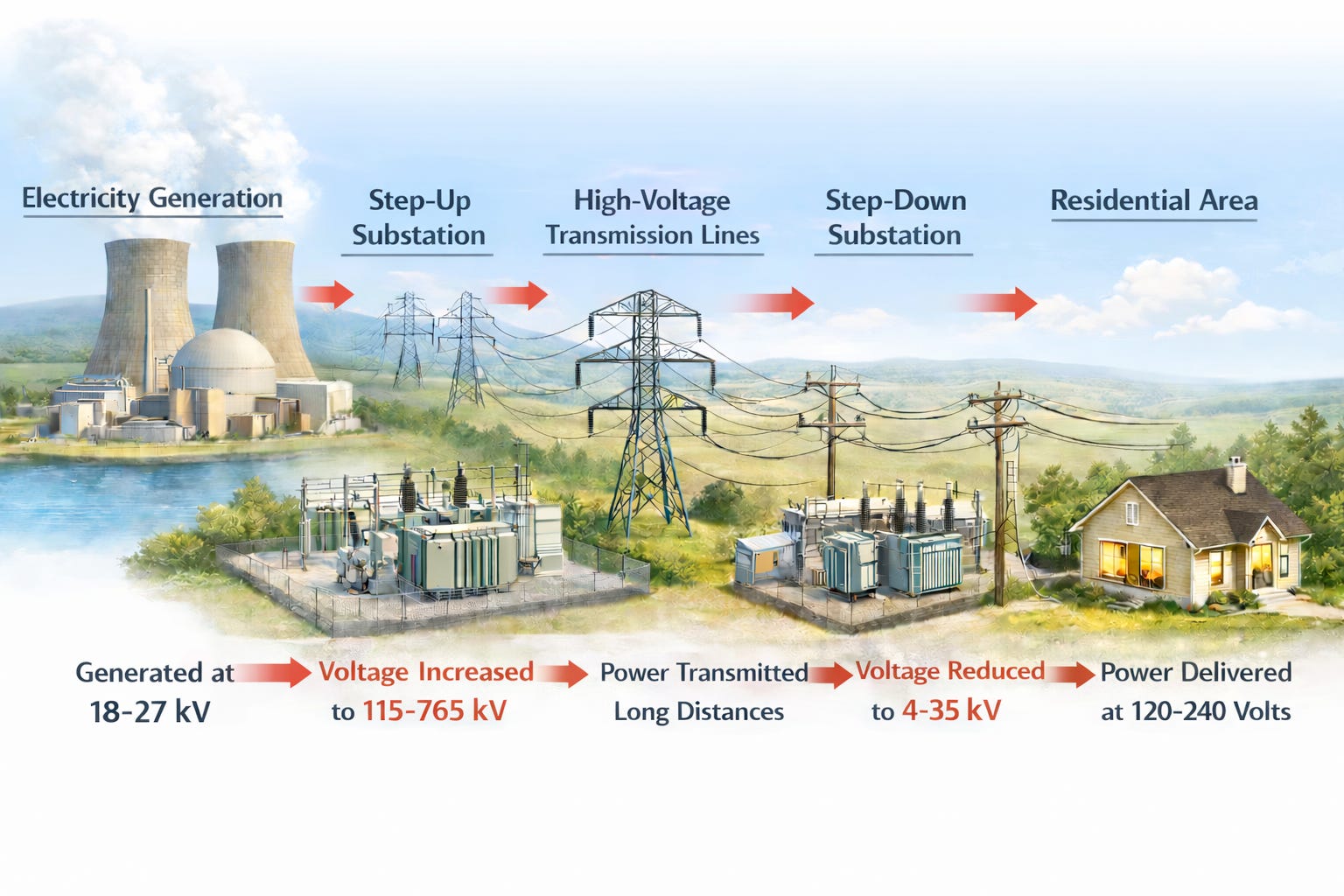
The movement of electrons through power lines produces extremely low frequency (ELF) electric and magnetic fields at 60 Hz (oscillating 60 times per second). At these frequencies, the fields vary so slowly that they induce only extremely small electric currents inside the human body. The amount of energy absorbed depends on field strength and how efficiently matter can respond at a given frequency. Think of a microwave. Microwave radiation moves up and down billions of times per second (GHz), and water (plus other molecules) cannot fully keep up with that rapid back-and-forth, so the extra energy is dissipated as heat. That is why your popcorn or tea heats up in the microwave.
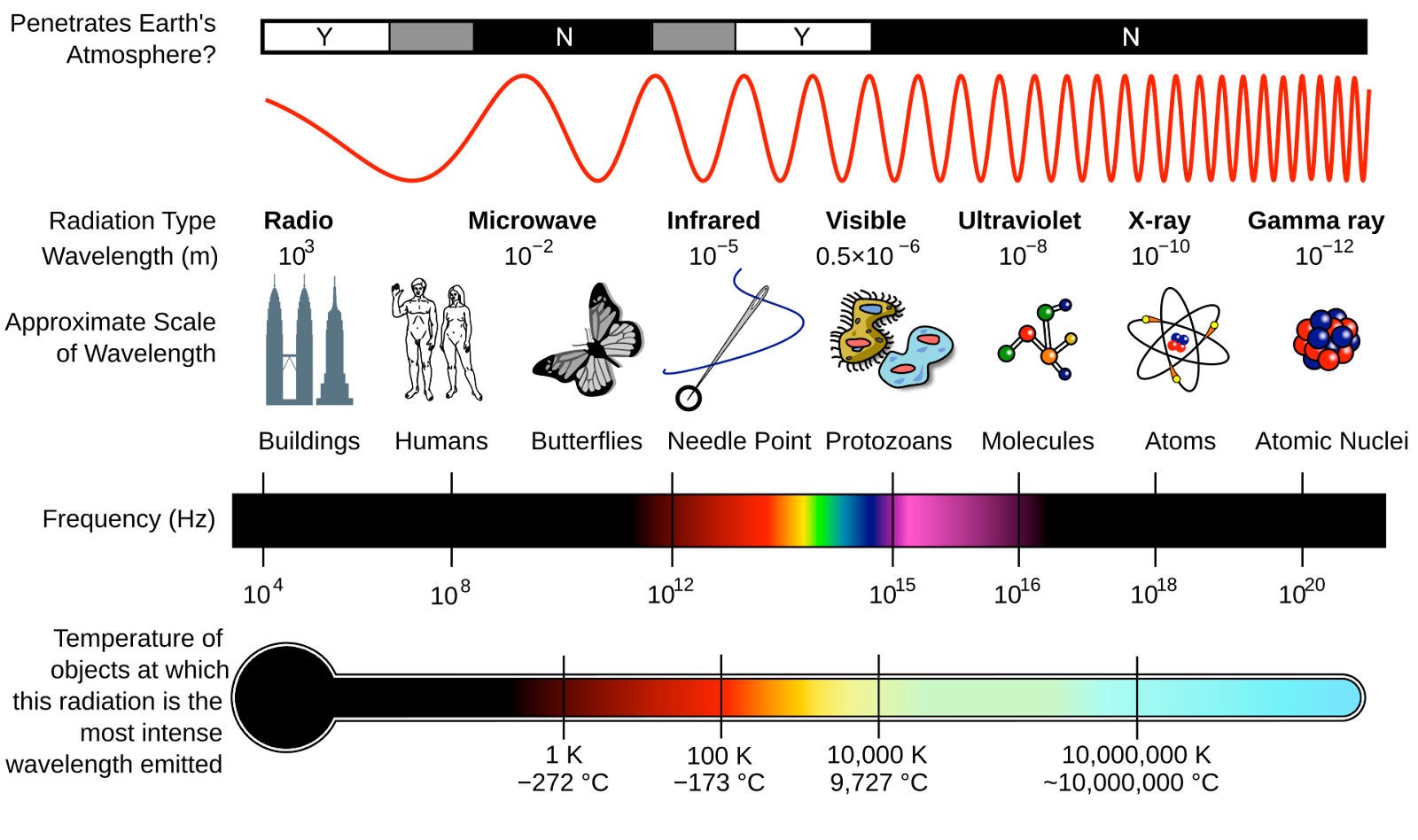
This is radically different from the ionizing radiation which carries enough energy to alter atoms and potentially damage DNA—the kind of radiation that comes from X-rays, gamma rays, or nuclear reactions. ELF fields from substations sit at the very bottom of the electromagnetic spectrum—below other non-ionizing radiation like radio waves, microwaves, infrared light, visible light, and even most ultraviolet light—and carry vanishingly little energy per photon.

Why This Can’t Cause Soft-Tissue Injury
The theorized mechanism by which an ELF field could weaken connective tissue, making tendons and ligaments more prone to tearing, is akin to a hot compress or sauna relaxing a muscle. Non-ionizing radiation, at sufficient intensity, can heat tissue. Returning to the microwave example, changing the power setting (500 Watts, 1000 Watts, etc, literally the conversion of electricity into EM waves) changes how fast it heats the food up. But the distance from the substation to the 49ers practice facility means the exposure to radiation-produced heat is negligible, at best. A hot compress—likely used heavily in the training facilities—in comparison, is actually a potent source of thermal energy delivered directly to tissue.
But, electromagnetic field strength decreases rapidly with distance. For most radiation if you double your distance, it is a quarter of the strength (Inverse square law, 1/r^2). So if you placed a source at the touchdown line, measured at 1 yard (1 m), then at 10 yards (10 m) it would only be 1/100th as strong. ELF fields drop even faster (1/r^3). Regardless, even if the players were training on top of the substation equipment, the radiation exposure would be minimal. Simply, the idea that the ELF magnetic field from the nearby substation is slowly cooking the 49ers joints is simply absurd.
The World Health Organization conducted a review of ELF fields in 2007 and concluded that “there are no substantive health issues related to ELF electric fields at levels generally encountered by members of the public.” The International Agency for Research on Cancer (IARC) classified ELF magnetic fields as “possibly carcinogenic” (Group 2B) in 2002 based on weak epidemiological comparison, not actual mechanisms of action. Crucially, this classification is about cancer, not soft-tissue injury. Group 2B also includes things like coffee and pickled vegetables: it means “we can’t definitively rule it out, but the evidence is limited.”
Cowan’s full case rests on non-thermal biological mechanisms that he argues existing safety standards fail to account for. But it is worth noting that four decades of research into ELF biological effects, synthesized by the WHO and IARC, have not established any mechanism by which fields at these exposure levels damage tissue of any kind. Crafting novel biological mechanisms that haven’t been reliably demonstrated even in laboratory settings requires a high burden of proof, and a magnetic field reading at a fence line does not meet it.
There is also historical evidence that the Silicon Valley Power substation is not turning the 49ers into jelly. As 49ers owner Jed York pointed out, the team has had its primary practice facility at the Santa Clara site since the late 1980s. “Jerry Rice was there,” York explained, “it didn’t seem to affect Jerry Rice.” The substation expanded in 2014 alongside the opening of Levi’s Stadium, but the facility’s proximity to electrical infrastructure is not new. If ELF fields caused soft-tissue injuries, we would expect to see it across dozens of NFL teams, college programs, and every factory, hospital, and school adjacent to the tens of thousands of substations in the United States.
Stop with the Radiation Fearmongering
Much of this conspiracy stems from the mistaken societal fear of radiation. When we catch our first glimpse of sunshine in the morning, or a late-night TikTok flashes conspiracies about substation radiation, it is the same fundamental particle, a photon. When you get an X-ray at the doctor, heat leftovers in the microwave, or click on the radio in the car: all photons.
It’s worth noting that what a substation produces at 60 Hz sits in a grey area. At wavelengths stretching thousands of kilometers, these fields never truly “radiate” but remain bound to their source. This is akin to the pull of a magnet than to light streaming from a bulb. In physics, this is called the near field. Building on the comparison, the magnetic field in an MRI machine is a static bubble around the machine, not an oscillating wave, and tens of thousands of times stronger, without causing more than dizziness in a small minority of patients. But because the public conversation lumps substations, cell towers, microwaves, and X-rays into one undifferentiated category of “radiation,” a broader tour of the electromagnetic spectrum is the most useful place to start.
Photons are unique in being both like a singular particle and like waves lapping on the shore, where the distance between cresting waves is the wavelength. Stretch that wavelength and you get radio waves and microwaves. Shrink it and you get infrared, then visible light (the glow of oven coils is because they are hot enough to emit in both the thermal and visible range), then ultraviolet, X-rays, and gamma rays. The transitions are a bit blurry, but one critical boundary lies within UV light: at ~124nm in wavelength, photons gain the ability to knock electrons out of atoms. That is the ionizing/non-ionizing divide, and it matters enormously.
But all radiation, ionizing or not, can be dangerous at sufficient intensity. The dose makes the poison. Cancer treatment with high-intensity ionizing radiation causes burns not unlike the heat burns you can get from an oven. These are called deterministic effects. This is the price to kill cancer faster than it wants to kill you. If you go to a roof with a cell phone tower, there are often signs warning of dangerous radiation levels. Not because the radio waves are inherently toxic, but because equipment meant to transmit energy for miles can heat you up if you’re standing right next to it. These are normal questions of safety. Similarly, electricity in your outlet isn’t coming to kill until you stick a fork in it.
The electromagnetic spectrum, from radio to gamma rays, is not a hierarchy from safe to dangerous. It is a continuum of the same particle at different energies. Our societal fear of “radiation” obscures its absolute ubiquity in existence. You cook food in the oven with infrared radiation. The sun warms the planet with the same photons that, at higher intensity and shorter wavelength, cause sunburns. The heat from gravity and radioactive decay keeps the Earth’s core molten. These are not exotic phenomena to fear. They are the basic furniture of the physical world.
In the same way, high voltage electricity can be incredibly dangerous, essentially the pressure of the electrons can deliver enough energy to kill a person. However, electricity and magnetism both fall incredibly fast with distance, faster even than radiation. The fact that magnetic fields are measurable at the fenceline of a substation is more of a testament to detection than to any appreciable emanation. We spent nearly every day of our lives next to wires that can produce around 2-3 milliGauss (mG) of magnetic fields, and Cowan measured up to 9. A hair dryer can give off 100 mG, but the risk of burning yourself is the only hazard. If such a microscopic signal could disrupt our biology, the Earth’s own 500 mG (average) magnetic field would make simple movement physically debilitating.
The Straightforward Answer
The 49ers conspiracy is weird and exciting, and will likely fade out of the public consciousness like any viral idea. But the cognitive leap underneath it will not. The instinct to lump all “radiation” into a single, scary category is a serious failure of scientific literacy in public life. And it does not just produce viral Twitter threads about football. It shapes energy policy. Public attitudes toward nuclear energy has shown that public opinion is driven less by actual risk assessment than by mental prototypes. They hear “radiation” and think of Chernobyl, not of the medical imaging that saves millions of lives a year.
When a society doesn’t spend much time differentiating a power substation’s 60 Hz magnetic field and the radiation from a nuclear reactor it becomes nearly impossible to have rational conversations about energy.
Football is not a gentle sport, even with improvements in protective equipment. Injury is common. Sometimes the bad luck piles all at once. The 49ers play a physical brand of football, they have had stretches of poor injury luck, and the specifics of their training regimen, field surfaces, and game schedules are all more plausible contributors than invisible 60 Hz fields.
Research does not support cell phones causing cancer. Microwaving your food does not change its chemical structure beyond heating it. Ionizing radiation can cause gene mutations, but our cells have billions of years of practice repairing such damage; problems generally arise only when the damage outstrips the ability to repair. And a substation’s ELF fields cannot weaken your tendons.
Electricity and electromagnetic radiation are manifestations of the same fundamental forces that let you flick a light switch, light up the night, charge your phone, and power the massive systems that move electrical energy across the globe. We should feel comfortable appreciating the modern marvels of technology that become so quickly benign. So next time you go to Levi Stadium, hopefully to see the start of a winning Super Bowl run, give the humble substation outside a little nod.