

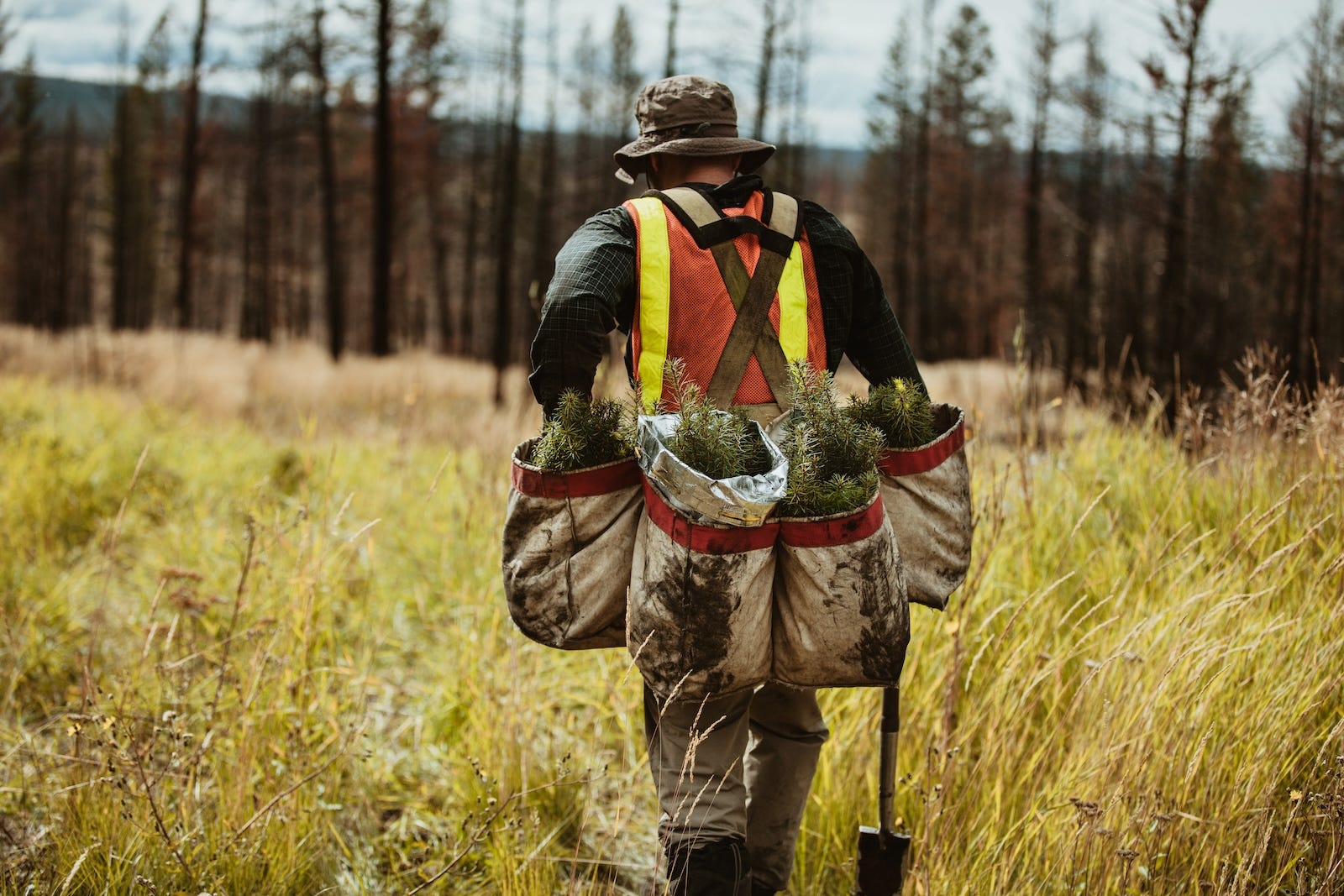
In the last few years, the Abundance movement has grown into a legitimate political force in the United States. What began as a loose coalition to remove artificial policy constraints to building more housing, cheaper energy, and better infrastructure has coalesced into a broader reform effort that defies traditional political boundaries. Amplified by last year’s best-selling book Abundance by Ezra Klein and Derek Thompson, the movement has drawn support from progressive reformers and free-market deregulators to climate advocates and urban YIMBYs.
One group that is notably missing from this coalition is the conservation community—the people and institutions devoted to protecting America’s lands, waters, and wildlife.
This is because conservationists often view the abundance agenda as blind to ecological realities. Journalist Ben Goldfarb observed that Abundance “has hardly a word to say about forests, oceans, fresh water, ecosystems, or wild animals.” Science writer Michelle Nijhuis noted that it “all but ignores life beyond city limits.” Andrew Bowman of Defenders of Wildlife warned that the movement “is predicated on a weakening of bedrock environmental laws that voters on both sides of the aisle will vociferously reject.”
In turn, abundance advocates tend to see conservationists as obstacles instead of allies. Nature rarely appears in abundance discussions except as a constraint or procedural hurdle. To abundance advocates, nature, or “the environment,” has often become synonymous with paperwork, delay, and higher costs.
While many in the movement are concerned about building more housing to address affordability, or deploying more clean energy to combat climate change, the protection of wild species and wild places has largely fallen outside their frame. And to the extent that environmentalism is rooted in the idea of a finite natural balance that humans disrupt, some have argued it is philosophically incompatible with a worldview that sees human ingenuity as additive rather than extractive.
But conservation goals need not be at odds with the goals of the Abundance movement.
Today, most conservation challenges are not, in fact, solved merely through acts of restraint. Rather, conservation is often something that needs to be produced through active stewardship. If we want more of it, we must build the institutions and incentives that make ecological abundance possible while supplying the housing, energy, and infrastructure that modern society demands.
If conservation is primarily about stopping things from happening, then it will always sit counter to a movement that explicitly wants to build. But if conservation is about producing ecological goods—more wildlife, restored wetlands, resilient forests, cleaner and more plentiful water—then the central lesson of abundance applies: remove supply-side barriers, align incentives, and reward results. In that frame, abundance is not necessarily the enemy of conservation but a catalyst for it.
The Supply Side of Conservation
Like abundance, the conservation movement has long been motivated by scarcity: species in decline, habitat lost to development, water consumed or polluted faster than it can be replenished. But whereas abundance is about removing barriers to address problems of scarcity, conservation has often been about erecting them. Where the abundance movement says “build more,” conservationists have often been the ones standing athwart history, yelling “stop.”
That ethos has animated the conservation movement for decades. The landmark environmental laws of the 20th century were designed to restrict human action. Wilderness designations set land aside to preserve its “untrammeled” character. The Endangered Species Act prohibits the “take” of listed species, broadly defined to include habitat modification. The National Environmental Policy Act requires extensive review of federal actions that could affect the environment. The North American Model of Wildlife Conservation, which guides state wildlife policy, is likewise rooted in scarcity: wildlife is a public trust to be protected from overexploitation, its use restricted, and its trade forbidden.
Those principles remain vital in many places. But 21st-century conservation challenges are no longer defined solely by scarcity, nor can they be solved by simply avoiding human impacts. Many species now persist only through ongoing human management. Roughly two-thirds of U.S. endangered species depend on private lands for habitat. More than 80 percent are “conservation reliant,” meaning they require continual human intervention to survive. Forests require active management to stay healthy and avoid catastrophic wildfires. Wetlands and streams need deliberate restoration.
Conservation today isn’t something that happens on its own. It must be supplied. It requires active work—restoration, stewardship, and management—and that work often faces supply-side barriers. The same procedural gauntlets that slow housing or infrastructure projects also slow restoration projects. The paperwork that stalls a transmission line can also stall a forest-thinning project or wildlife-crossing installation. A law that treats every change on the landscape as a potential harm will struggle to see deliberate change as a benefit, even when the measure is a carefully planned prescribed burn or wetland restoration project. The unintended effect is a status quo bias that quietly undermines ecological abundance.
Endangered species recovery is a quintessential example. Because most imperiled species rely on private lands for habitat, they need landowners to invest in habitat restoration. Yet, under the Endangered Species Act, restoring habitat can trigger sweeping “take” prohibitions or critical-habitat designations that constrain land use and depress property values. Instead of encouraging restoration, this punitive approach can make it a liability. With perverse incentives like this, it’s no surprise that just 3 percent of listed species have recovered, and the Fish and Wildlife Service has made little progress on most species’ recovery plans.
A similar dynamic plays out in forest management. After a century of fire suppression and a lack of proactive management, America’s forests have grown unnaturally dense, fueling catastrophic megafires that can destroy forests and harm the very species environmental laws were meant to protect. Both the Trump and Biden administrations have embraced proactive forest restoration through mechanical thinning and prescribed burning. Yet these projects face the same procedural bottlenecks and litigation barriers that slow infrastructure projects. Clean-air regulations also compound the problem by penalizing the smoke from prescribed burns—the “good fires” that prevent catastrophic ones.
The pattern repeats across other restoration efforts. Wetland restoration projects can take years to permit under state and federal clean-water regulations. Installing beaver-dam analogs—simple structures that restore stream hydrology—can trigger the same permitting requirements as intensive development projects. In California, a single Sierra Nevada meadow restoration project can require compliance with as many as nine separate regulatory processes. The systems meant to protect nature now often prevent us from restoring it.
Abundance can enhance conservation through efficient land use—for example, building denser housing or producing more food or energy from less land. But land rarely “rewilds” itself. It takes active restoration that requires immense human effort and even policy reform. Landowners need to be rewarded, not punished, for restoring habitat. Agencies need authority to lease lands for conservation, not just extractive uses. Permitting must be streamlined for restoration, not just development.
An abundance approach to conservation, then, would shift the focus of conservationists from protection alone to production as well. It would treat conservation as a supply challenge that requires the same creativity, flexibility, and institutional reform that the abundance movement calls for in housing and energy. And it would seek to address environmental issues not simply by avoiding human impacts on nature’s balance, but by creating institutions that enable people to reconcile competing demands over land, water, and wildlife in ways that achieve both conservation and human flourishing.
Market Alternatives
Boosting the supply of conservation is one thing. But what about when nature collides with other abundance priorities, such as new housing or energy projects? As Ben Goldfarb writes, the Abundance movement “has a lot to say about solar farms and transmission lines and nuclear reactors, but little about peregrine falcons and pronghorn antelope and Chinook salmon—and nothing about what to do when industrial renewables and nature inevitably clash.”
For half a century, the default approach to resolving these conflicts has been procedural and adversarial. Projects must run the gauntlet of environmental review, public comment, endangered species consultation, and the ever-present threat of litigation. To abundance advocates, this exemplifies the “vetocracy” that has paralyzed many aspects of modern governance. To conservationists, it remains the last line of defense for the natural world. Both perspectives contain truths, but together they have produced a system that often serves neither nature nor progress especially well.
As Sam Dumitriu has argued at Notes on Growth, most environmental law “isn’t about finding the most cost-effective ways to enhance biodiversity and protect endangered species. Rather it is about preventing specific harms caused by new infrastructure projects.” This means “following the rules takes precedence over impact”—mandating, for example, expensive bat tunnels and fish discos that do almost nothing to protect species, or years-long environmental reviews followed by litigation. These requirements can add millions in costs and delays without meaningfully improving environmental outcomes.
There is, however, another way to reconcile these conflicts in ways that align with abundance’s pro-growth instincts while delivering real ecological gains. Market mechanisms can achieve environmental goals at a system level, using prices and incentives to channel human activity rather than freeze it. This approach defines ecological outcomes, allows flexibility in how they’re achieved, and lets prices guide effort where it is most effective.
Such market mechanisms exist in several forms. Offset-based systems enable development to proceed so long as its ecological impacts are adequately compensated elsewhere. Tradable-permit systems set firm ecological limits—for example, on harvest, take, or pollution—and allow participants to trade rights within that limit. Both approaches reject a purely procedural mindset that tries to micromanage every action or project. Instead, they allow development to move forward while ensuring ecological goals are met.
This approach may be familiar. The acid rain program, created under the 1990 Clean Air Act amendments, set a nationwide cap on sulfur-dioxide emissions from power plants and allowed utilities to trade emission allowances. The program didn’t dictate smokestack technology; rather, it set an environmental target and let the market discover how best to meet it. The results were impressive. Emissions fell by half, and at a fraction of the expected cost.
Marine fisheries offer another example. For decades, U.S. fisheries were caught in a destructive race to fish, where short seasons, overcrowded fleets, and perverse incentives led to depleted stocks. Catch shares—tradable quotas that allocate each fisherman a share of the total allowable catch—reversed that dynamic in several fisheries from Alaska to the Gulf of Mexico. As Amanda Leland and James Workman document in their new book Sea Change, catch shares reduced overfishing and rebuilt stocks while creating an unlikely alliance between environmentalists and fishermen.
Reward Outcomes, Not Process
Offset systems follow a similar logic. Wetland mitigation banks allow developers to pay for ecological restoration elsewhere rather than attempt small, on-site fixes. Such banks are generally far better at delivering positive long-term environmental outcomes than traditional permittee-responsible mitigation. When implemented effectively, the result is both more development and higher-quality wetlands.
A similar approach can be used for wildlife. Florida’s gopher tortoise relocation program shifted from a compliance-oriented system—where tortoises were often entombed on development sites—to an outcomes-oriented market for conservation. Developers purchase relocation credits from protected sites with high-quality habitat. Tortoises are relocated to permanently secured habitat, developers get predictability, and conservation dollars flow where they are most effective. Similar programs exist for sage grouse and several other species.
To be sure, offset systems are not a panacea. Design matters. Early wetland mitigation often failed because regulators measured success by acreage rather than ecological function or allowed mitigation to occur far from the affected wetlands. To succeed, programs need clear standards, enforcement, and ongoing monitoring. When those elements are present, such systems can outperform the procedural status quo on both development and conservation.
The principles underlying these mechanisms could be expanded well beyond pollution control, fisheries, and wetlands. Similar frameworks have been proposed for wind energy impacts on golden eagles, underwater noise from commercial shipping vessels that harms marine mammals, and biodiversity credit markets that would allow development projects to offset impacts on terrestrial habitats and species through verifiable credits generated elsewhere.
These examples share a common institutional insight: they reward outcomes instead of process. Traditional regulation says, “you can’t act until you’ve cleared every procedural hurdle.” Market systems say, “you can act as long as you meet the ecological goal.” The first model assumes stasis is safest. The second assumes that progress is possible, and that the best way to protect nature is to reward those who produce it.
Conservation Abundance
If abundance is about removing barriers to supply, then a conservation-abundance agenda should remove barriers to supplying ecological improvement. Market institutions are especially well suited to making that possible.
A conservation-abundance agenda also doesn’t pretend tradeoffs don’t exist. Instead, it provides mechanisms to resolve them in ways that are functional rather than paralyzing. It recognizes that ecological abundance is something we can produce, not merely preserve, and builds institutions that reward outcomes rather than procedural compliance.
The institutions we inherited were largely built for an era when conservation meant saying no. Abundance requires a different posture that embraces change, channels it, and generates more of what we value, which includes nature. That will require new tools, new policies, and new alliances between groups that have long viewed each other as adversaries.
We can have more housing and more habitat, more energy and more wildlife—if we build the right institutions to make it possible. That is the conservation agenda the abundance movement needs, and the abundance agenda conservationists should embrace.
Shawn Regan is a senior fellow at the Manhattan Institute.

Excellent article, Shawn. I'd add that restoration will become even more of an imperative as we decouple land from production. More from less means we could have marginal land taken out of production. We'll need the tools to restore it.
Good points but in fact a conservationist group, breakthrough institute, is one of the main orgs driving the abundance movement