

This past week, the U.S. Senate voted to pass the Bipartisan American Affordability and Jobs Act (BAAJA) 62-33. BAAJA is a landmark piece of legislation that would radically alter American environmental permitting procedures and enable the infrastructural projects fundamental to an abundant future: clean energy including nuclear, transmission, critical mineral production and processing, forest management, and more. As we await a House vote on the package, we at Breakthrough wanted to highlight why BAAJA needs to pass.
America Needed Permitting Reform All Along
In early 2022, a year into President Biden’s investment-focused strategy to build back better, Ted Nordhaus was in the pages of The Wall Street Journal with an, at the time, unpopular argument: the barriers to the abundant clean energy future imagined by climate hawks, environmentalists, and the Democrat-led government were not “too little money,” but rather, the outdated environmental laws like the National Environmental Policy Act (NEPA) that make it near impossible to build big projects.
“The U.S. can no longer continue to neglect its compounding infrastructure and clean-energy needs,” Ted wrote. “We aren’t going to regulate our way to a thriving low-carbon economy and a more stable climate. America needs to get back to building again.”
Weeks later, Alex Trembath coined a new phrase, “cost-disease environmentalism” in City Journal. “Cost-disease environmentalism” is “what happens when federal subsidies for low-carbon infrastructure collide with federal regulations against infrastructure construction.” Like Ted, Alex warned that the massive spending promised by the Biden administration could crash and break against the hard barriers of environmental permitting. Shortly after Ted and Alex’s warnings, Democrats passed the Inflation Reduction Act and neglected to follow through on permitting reform, a failure that has since come to be understood as the fatal weakness of the Biden climate agenda.
In the years since, we at Breakthrough have been building the case for environmental regulatory and permitting reform.
In 2024, we published Understanding NEPA Litigation, a systematic review of NEPA-related Appellate court cases between 2013 and 2022. The report found that those NEPA cases often served simply as a weapon of delay for serial litigants interested in making clean energy, transmission, forest management, and other projects expensive. Litigious non-profit organizations instigated 72% of the challenges, and lost their cases about 80% of the time.
A year later, we updated that analysis with a broader assessment of all NEPA-related Appellate and District court cases over the same time period, in a new report, The Procedural Hangover, and interactive webpage. That report affirmed our previous findings: NEPA served as a tool of delay, with few challenges leading to real project changes. The Procedural Hangover underlined a key reality of the permitting status quo:
“Plaintiffs regularly sue federal agencies intending to alter, delay, or cancel major infrastructure projects, putatively in the name of environmental protection. But these lawsuits often result in precisely the opposite: obstructing or delaying efforts to deploy low-carbon power generation, construct long-distance transmission lines, execute fuels reduction projects on public grasslands and forests, lower greenhouse emissions, and enable energy abundance.”
The irony of environmental groups representing a structural barrier to clean energy projects, transmission lines, and wildfire mitigation appears more as tragedy than farce. This is especially true when it comes to forest management and wildfire mitigation. In a December 2025 essay for The Ecomodernist, Alex Smith and Elizabeth McCarthy showed that a majority of NEPA lawsuits related to forest management in Appellate and District courts were filed by just three small non-profit organizations. These organizations, without any democratic oversight, could effectively hold the U.S. Forest Service hostage and delay—and sometimes outright cancel—projects aimed at curbing wildfire risk.
This is not without consequence. These groups delay crucial projects in the name of “habitat preservation” only to see much of the habitat they’re aiming to preserve go up in flames when the stand-clearing fire that the original project was intended to avert rips through the forest in question, as evidenced by the sad story of the Smokey Project.
The Road to BAAJA
But, we have not simply built the case for permitting reform, we’ve also helped establish the policy pathways and arguments necessary to construct BAAJA.
In October, 2025, Marc Levitt published Reboot NEPA, a policy brief laying out what a real NEPA reform could look like. Critics of permitting reform like to cast it as a choice between building things and protecting the environment—a dichotomy that is apparent in the current BAAJA discourse. But that premise is false. NEPA, Marc argues, has been broken for years. Years of bureaucratic and regulatory buildup have turned a five-page law “into an impenetrable body of process and law.” NEPA needs to be returned to its factory settings—keeping its core commitments, like government oversight and public input, while rejecting the last five decades of regulatory sclerosis.
But, NEPA has never been the only problem. Clean energy projects, and transmission lines especially, have to clear a gauntlet of other statutes. For example, Clean Water Act Section 401 lets states veto interstate transmission in the name of water quality.
Then there’s the National Historic Preservation Act (NHPA), which was passed in 1966 to stop the destruction of genuine landmarks, but its review process now struggles with the scale of modern infrastructure. In July, Marc and Elizabeth published Modernizing Preservation, examining the specific systemic failures of NHPA Section 106 when applied to expansive, linear infrastructure like interstate power lines and pipelines. They identified timing as the central failure mode: tribal consultation usually occurs long after project routes are established. Consequently, tribes are forced into a reactive posture, federal authorities face heightened legal vulnerability, and project developers face severe financial exposure post-investment. To resolve this, they advocate for early corridor-level cultural screening alongside definitive regulatory endpoints for tribal engagement—ensuring historical preservation refines infrastructure planning rather than weaponizing delay.
Making the Case for BAAJA
When Senators Shelley Moore Capito (R-WV), Sheldon Whitehouse (D-RI), Mike Lee (R-UT), and Martin Heinrich (D-NM) released the text of BAAJA in September, Breakthrough endorsed it the same day. Since then, we’ve been making the case for why it matters and countering the arguments of people that want BAAJA dead.
First, Marc clarified why CWA Section 401 modifications remain vital. Unreformed, Clean Water Act Section 401 allows obstructionist state authorities to maintain a backdoor veto over critical interstate power lines. While critics argue this strips states of environmental oversight, Marc demonstrated the opposite: BAAJA preserves state power to mandate legitimate water-quality safeguards, simply ending the practice of weaponizing 401 as a multi-purpose regulatory veto and political bargaining chip.
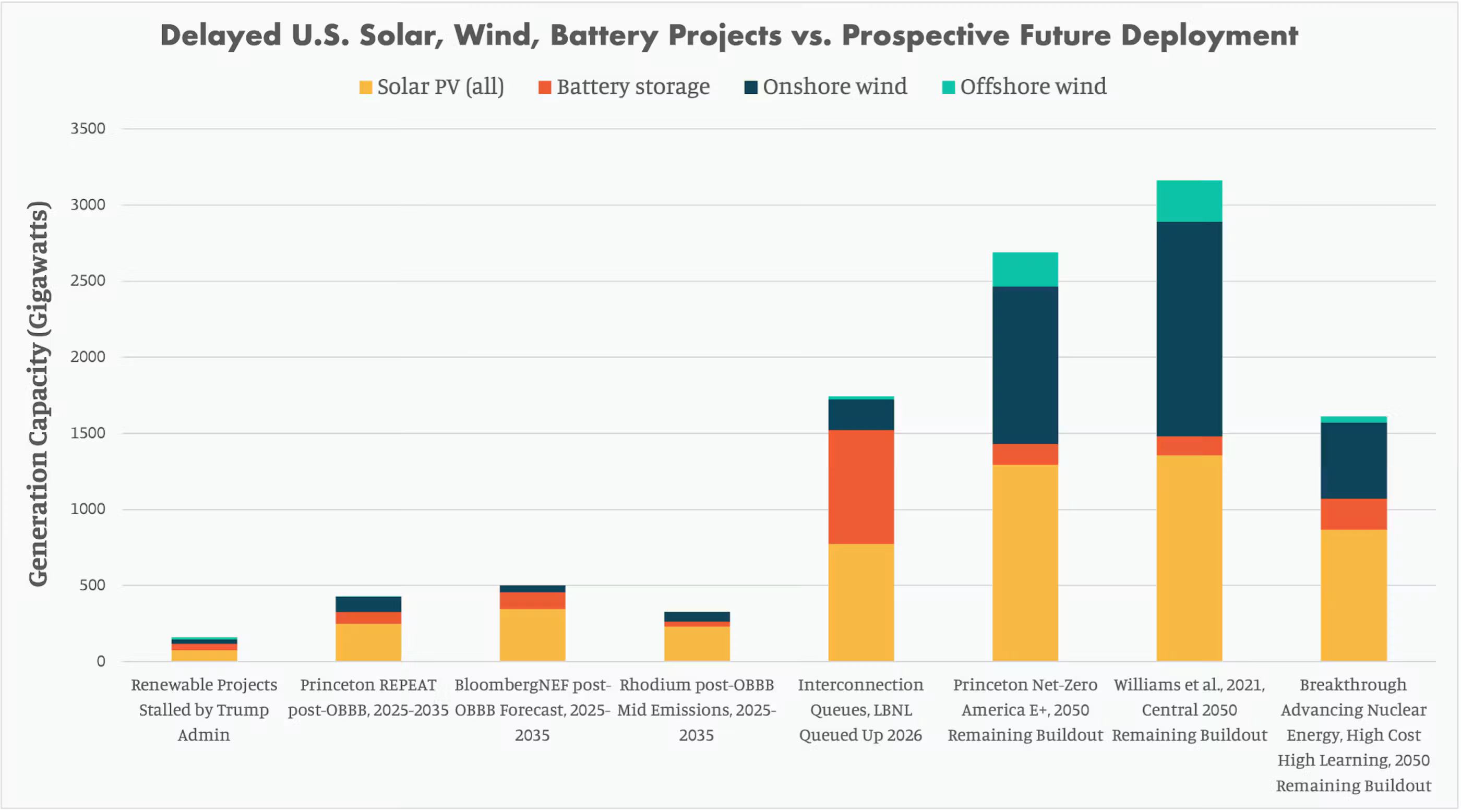
While certain Democratic lawmakers advocated delaying support to secure guarantees regarding the current administration’s treatment of renewable energy, Seaver Wang demonstrated that the affected wind and solar developments represent under ten percent of the nation’s required long-term expansion. Given that zero-carbon power accounted for approximately 93 percent of recent domestic grid additions, streamlining permitting overwhelmingly advantages low-carbon infrastructure. “Forfeiting the decades-long clean energy benefits of the permitting deal out of fear over what President Trump could do in his last two years in office would be a strategic mistake.”
Domestic mineral extraction has faced a prolonged decline, with the American share of international mining investments plummeting from 20 percent in 1993 down to 11 percent by 2020, alongside a 70 percent contraction in metal mining facilities since 1983. Writing on these structural bottlenecks, Peter Cook argues that while BAAJA does not solve all the problems facing the U.S. critical mineral supply chain, it “fixes a broken permitting system that needlessly raises the cost, risk, and time it takes to develop mines and build processing plants.”
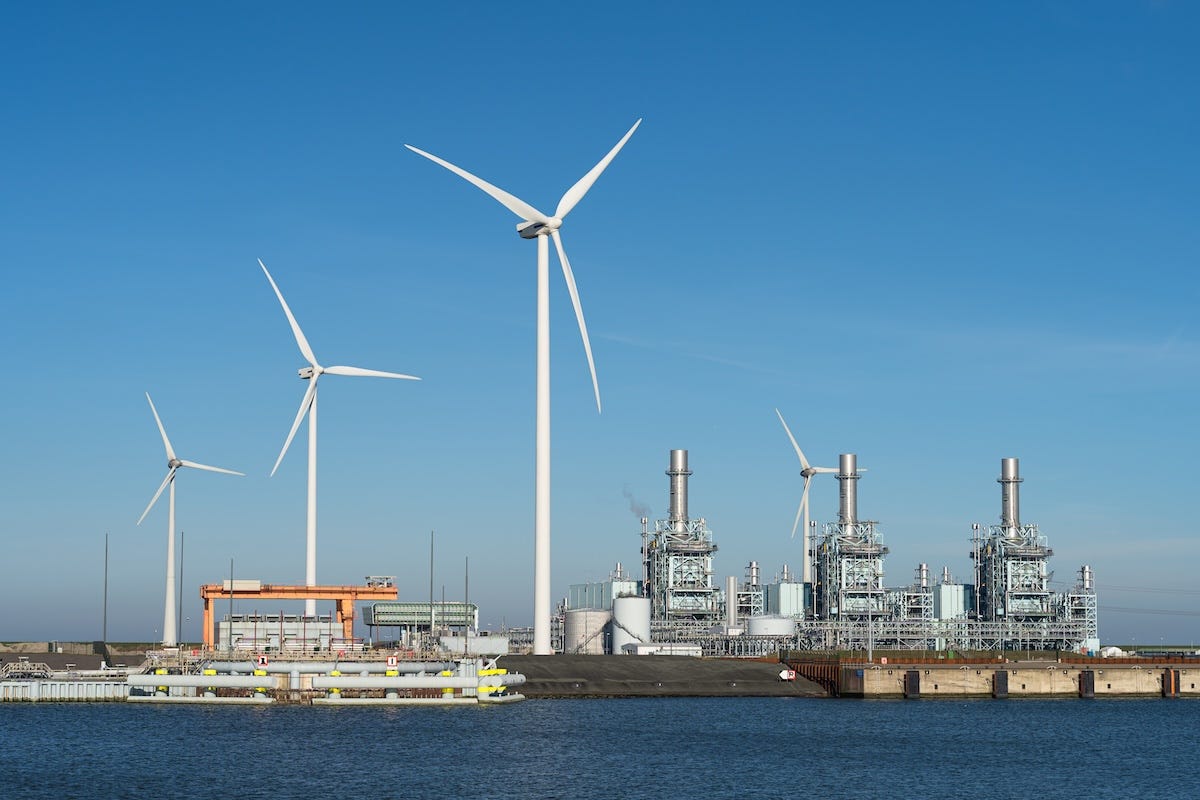
With environmentalist opposition to BAAJA denying the clean energy benefits of the permitting package and fixating on the idea that it would lock-in fossil fuel infrastructure, Seaver Wang, Ryan Alimento, and Alex Trembath looked back at previous environmentalist critiques of permitting reform. What they found was faulty logic and poor modeling that employs bad assumptions to make grandiose claims, and blames permitting reform for fossil fuel construction that would have been built regardless. “Stonewalling BAAJA,” they argue, “will…preserve the obstacles impeding the clean energy buildout, by maintaining the permitting, interconnection, and regulatory barriers that effectively handicap clean energy relative to fossil fuels.”
Prior to the Senate floor vote, Alex Trembath methodically dismantled the opposition’s most hyperbolic rhetoric—ranging from alarming assertions that BAAJA would clear the way for coal-fired generation inside the Grand Canyon to claims that it would expedite ICE detention facilities. “The cost and procedural barriers facing environmentally-friendly technologies and infrastructure, oftentimes due to the very laws intended to protect the environment, have become impossible to ignore.”
The Senate has done its part. Now it’s the House’s turn to build the future.