

On October 22, 1844, tens of thousands of Americans left their homes and climbed their local hilltops. There they waited through the night, expecting Christ’s return. These were the Millerites, followers of a 19th century preacher named William Miller. He believed that he had pinned down the date of the second Advent—albeit after a few erroneous predictions. His adherents spent the year forgiving debts, dispensing with personal belongings, and neglecting to sow their fields. On that fateful October evening, they dressed themselves in simple handmade garments and went out in the cold to await the end of the world. Only it never came.
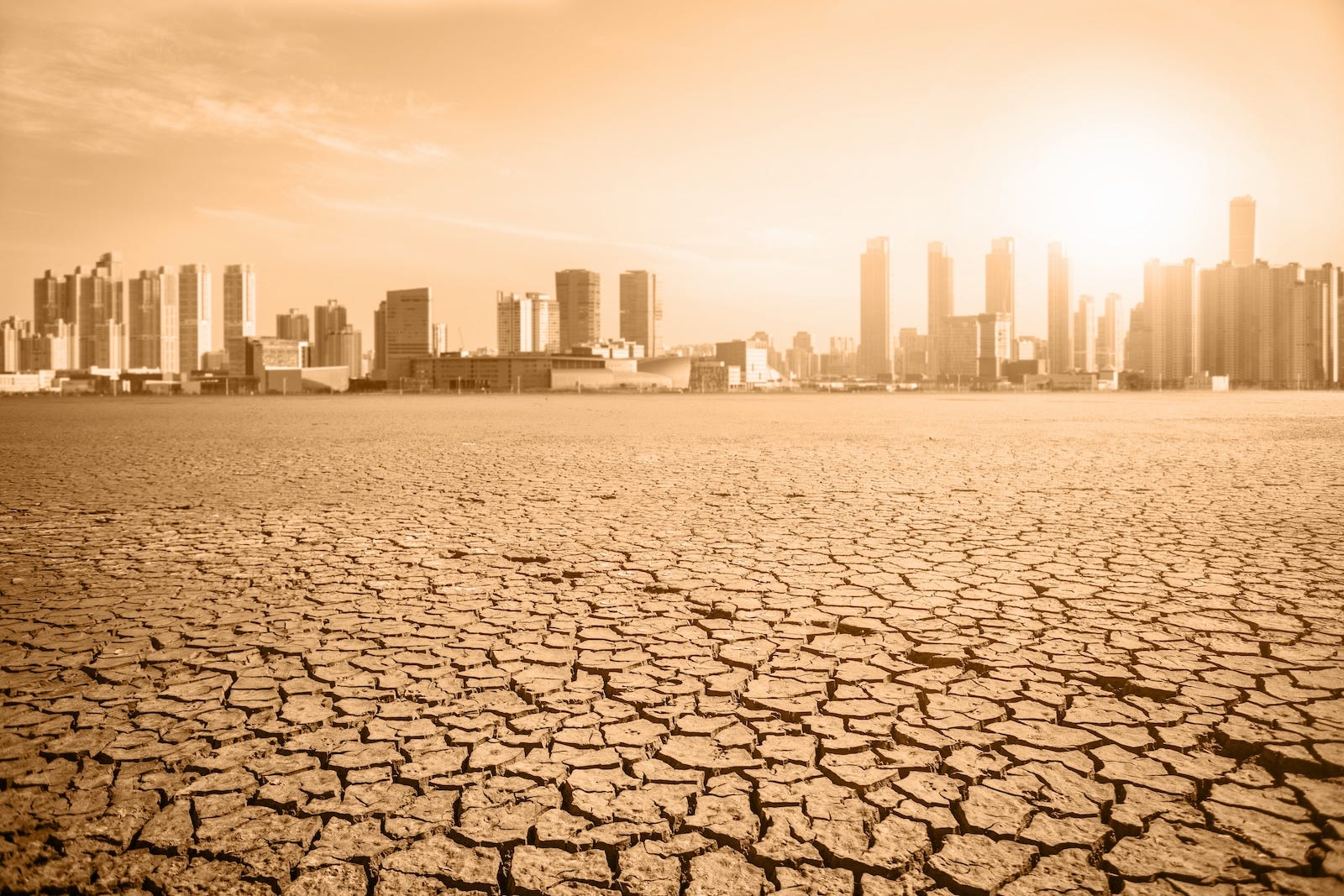
I have never spent a cold October evening sitting on a hilltop in anticipation of the end times. Yet, sometimes I feel like a recovered Millerite. The only difference is that I sat on a mountain of anxiety, worrying about climate change. This was back in the 2010s, when many of us also believed that the world was about to pass the peak of global fossil fuel production. We awaited a future that not only featured unimaginable climatic horrors but also lacked any remaining energy resources to be able to deal with them.
The apocalyptic appears to increasingly infect all of modern politics. It seems impossible to debate laws about who should be able to use what bathroom or deliberate firearm legislation without provoking phrases like “existential threat” or the belief that politicians are “denying” some person’s “right to exist.” Many Americans stay up late on November evenings awaiting the collapse of American society should the wrong person be elected president. But like the Millerites, they head down the mountain of built up dread and go to work the next day—only to repeat the ritual four years later.
But it is the environment where our tendency toward the apocalyptic feels most pronounced. The politician and diplomat George Perkins Marsh once wrote, “the earth is fast becoming an unfit home for its noblest inhabitant, and another era of equal human crime and human improvidence…would reduce it to such a condition of impoverished productiveness, of shattered surface, of climatic excess, as to threaten the depravation, barbarism, and perhaps even extinction of the species.” Although that might sound like a timely point of view, Marsh actually wrote those words back in 1864.
The past century has witnessed a litany of apocalyptic environmental proclamations. The 1970s were dominated by predictions of overpopulation leading to widespread famine. Some scientists even claimed that “in a decade, urban dwellers will have to wear gas masks to survive air pollution.” In 2007, then-IPCC chairman, Rajendra Pachauri claimed that we had five years to get our acts together, lest we suffer a global catastrophe with submerged islands states and declining GDP. Yet, a United Nations report managed to find an additional seven years of grace time for humanity, albeit eleven years later in 2018.
Environmentalism’s chronic apocalyptic refrain isn’t really emblematic of the Millerites, who mostly went back to their normal lives after the Great Disappointment in 1844. No, today’s apocalyptic environmentalists are more like the Adventist sects that superseded them, the diehards that believed that the Millerites had simply misread the signs—those who even today continue to await the End Times.
What explains the persistence of apocalyptic beliefs? The seemingly commonsensical answer would be, “The end of world, duh.” Yet the sheer weight of falsified predictions should disabuse us of that argument. As British literary critic Frank Kermode observed, “Apocalypse can be disconfirmed without being discredited.” There is something striking about the resilience of environmental apocalypticism in the face of the fact that it never seems to actually arrive.
Philosopher Maarten Boudry argues that few people really believe in climate doom. In his view, the discrepancy between alarmist rhetoric and the on-the-ground behavior of alarmists shows that the environmental movement is mostly about “ideological posturing, blindly raging against ‘the system,’ and feeling morally superior to everyone else.” If people really do believe in a coming climate catastrophe, why aren’t they committing acts of eco-terrorism?
But this line of thinking neither takes apocalypticians seriously and nor the seriousness with which doomists take their beliefs, even if the vast majority of them are just posturing. The more important point is to see what apocalyptic environmental thinking does: how it distracts us from the hard realities of planetary challenges and why it keeps us locked into fanatical confrontations. But revealing the limits and unintended consequences of environmental doomism won’t free us of its hold. The allure of the apocalyptic may be something that we can temper and redirect but never transcend.
Prediction or Prophecy?
What makes the eco-apocalypse different from traditional millennialism is that it appears to take its cue from science rather than from ancient scripts or charismatic spiritual gurus. Humanity’s downfall, in this case, is known by taking a sober look at the reality reflected in climate models, biodiversity indexes, and scenarios of future global temperatures and extreme weather trends.
Even advocates of the most dismal vision of ecological calamity take pains to comb through the scientific literature. The disaster porn classic The Day After Tomorrow is a dramatization of a collapse of the Atlantic Meridional Overturning Circulation. While the film is extravagant, some scientists think something like the film’s scenario could unfold over decades.
Roy Scranton’s Learning to Die in the Anthropocene elaborately reconstructs humanity’s climatic history before concluding that “we’re fucked.” It is a conclusion that he arrives at only by presuming that a long outdated and unrealistically extreme climate scenario (RCP 8.5) represented a conservative prediction of Earth’s climatic future.
David Wallace-Wells’ The Uninhabitable Earth likewise provides an avalanche of citations to scientific studies. He assembles what seems to be a full compendium of all the scary possibilities of climate change to reach a conclusion not unlike Scranton’s. Wallace-Wells insists that “whole regions will become unlivable by any standard we have today as soon as the end of this century,” even as he hedges scientific claims with words like “would” and “might.” The intended effect of thousands of alarmist “maybes” is a kind of cataclysmic certainty.
Wallace-Well’s perspective was heavily criticized by scientists and climate scholars. Indeed, it’s not difficult to pick a random cited study in The Uninhabitable Earth and find that the actual state of the science is less certain and more complex that Wallace-Wells depicts it. For example, he blames a warming climate for an epidemic of kidney diseases among El Salvadorian men who work sugarcane fields. Yet, scientists have found that sugarcane workers are almost uniquely prone to the disease, when compared to similar professions. The likely culprit may be sugarcane ash. When the residues from the sugarcane extraction process are burned, workers inhale kidney-damaging silica particles. No doubt that heat and humidity don’t help, but Wallace-Wells’ implication that a warming world was coming for all of our kidneys was just him leveraging partial and uncertain scientific results in service of an apocalyptic narrative.
Renaissance-academic-turned-climate-scholar Genevieve Guenther defends Wallace-Wells from these charges, arguing that it’s the scientific critics who err. “Even the most alarmed scientists are optimistic that we can avoid climate apocalypse only because of their timidness. They lack the imagination to see what “The Uninhabitable Earth” has laid so shockingly before our eyes,” contends Guenther.
In essence, Guenther argues that scientists’ lack of sufficient pessimism is just due to their discomfort with imagining the end times. But for those who have correctly received Wallace-Wells’ revelation, they are now ready to act. To Guenther, we need climate apocalypticism, for only then can we have “the groundswell of fear and desire that forces the necessity of action. The scientists must let the writers do their jobs. On their work, on all our work, the world depends.”
Such logic uncovers the workings of apocalypticism, in environmentalism as much as elsewhere. Scenarios and forecasts function less as predictions and more as prophecies. Predictions are fallible, an effort to try to understand tomorrow based on our limited knowledge of today. And failed predictions should lead us to reevaluate our theories about reality. Prophecies, on the other hand, are never falsified, just reinterpreted. And they are primarily about moral guidance. Repent and change your ways. Or else.
What the Apocalypse Reveals
Religious scholars argue that the Book of Revelations was less meant as a literal prediction of the end of the world and more as a kind of political fan fiction, a hopeful telling of the demise of the Roman empire that had for so long kept early Christians under its boot heel. As such, the function of apocalyptic thinking is less about the anticipation of the actual end times and more in service of demarcating heretics from the chosen people. In its original Greek, the word apocalypse described a “revealing” of heavenly knowledge. Only later did it become a synonym for cataclysm.
The apocalypse perhaps meets a deep seated need to see the world in terms of angels and demons, and to daydream about restoring Eden. As environmental scholar Eric Zencey put it, we can’t seem to shake “the legacy of a resentment that longs for a revenge through a final, accounts-balancing judgement upon those who do us wrong.”
At its most extreme, apocalypticism has served as a backdrop for genocide. As Historian David Redles has shown, many Nazis believed that Germany was already living through the biblical tribulations. Adolf Hitler was more than just a politician but someone who promised salvation, to prevent the German people’s enslavement or annihilation by Jewish-Bolsheviks and to usher in the Millennial Reich.
Groupish thinking also seems to motivate more naturally or cosmically derived cataclysmic worries. The chosen are small sect of foresighted Cassandras that are being dragged into the end times by the rest of humanity. Jura Soyfer’s 1936 play, Der Weltuntergang, depicts Earth on a world-ending collision course with a comet. One character, Professor Guck (literally “Professor Look”), recognizes the danger and even has devised a solution for it, but his warnings go unheeded and are even denounced by government officials. A pop song about the end of the world becomes a hit, while charlatans peddle tickets for spaceships that will never leave the ground.
The more recent but equally dismal film Don’t Look Up is evidently a modern adaptation of Soyfer’s play. Director Adam McKay insists that the film is meant to inspire people to “make the climate crisis the No. 1 priority.” Yet, like Soyfer’s play, it is relentless in dwelling on the utter corruption and stupidity of most of the human species. The film’s point actually seems to be enjoying a bit of Schadenfreude in light of humanity’s anticipated self-extinction. The cataclysmic impact arrives to deliver cosmic punishment upon a world society that rightly deserves it, or at least one that is damned by the small-mindedness of its mouth-breathing majority.
Each flavor of eco-apocalyptic thinking has its own bogeyman. Planetary doomists, like McKay, wring their hands over the average human’s environmental irrationality. Only the righteous few fight a hopeless battle against people’s willful ignorance. While some versions of this apocalyptic story hold out hope for new kind of ecological person, redemption is typically something reserved for nature, not for mankind.
For advocates of economic degrowth, of turning back the clock on technological societies, the champions and beneficiaries of capitalism are the planet’s nemesis. A podcast about Donella and Dennis Meadows, authors of the infamous Limits to Growth report published by the Club of Rome in 1972, called Tipping Point, tells of the tragically influential disagreement between the report authors and economists, such as William Nordhaus. Without those pesky economists, the podcast implies, the Club of Rome’s warnings about worldwide collapse back in the 1970s would have been heeded. Governments would have begun negotiating “an orderly transition to a stable world.”
As much as degrowth’s supporters try to frame the issue in terms of models and datasets, ultimately its underlying story points to the moral decay of growth-based, technological society. Indeed, the Meadows’ own interests in planetary limits didn’t start in the computer lab but rather developed through their experiences as college students on the hippie trail to India. They returned to America equally aghast at third-world poverty as they were at their relatives’ insatiable but seemingly unfulfilling material wants. The Meadows extolled an equilibrium society not simply as a solution to inevitable ecological constraints but also because it promised the possibility to be “freed” from a degenerate consumerist society.
Ecomodernism, in contrast, was born out of a rejection of apocalypticism. In their 2007 book Break Through, Ted Nordhaus and Michael Shellenberger observed that “there is no such thing as great millennial politics…they are all revenge fantasies.” Yet, even anti-apocalypticists can struggle to escape the gravitational pull of Manichaeism. As ecomodernism has matured, its original emphasis on opening up our imaginations with respect to saving the environment has coalesced into a specific vision of planetary redemption, one that can’t help but make degrowth environmentalists into the enemies of progress, at least in the eyes of a few self-professed ecomodernists.
“Nature unused is nature spared” has become an ecomodernist mantra, which invariably turns some conceptions of environmental harmony into heresy. Degrowth is merely “a worldview and a vibe”, pining for a low-power/small is beautiful semi-rural living powered by wind turbines and solar panels. It is an anti-technological stance that threat to gobble up wild spaces that ought to be left pristine, distracting from nature-sparing solutions like urbanization, agricultural intensification, and nuclear power. Even the opponents of eco-apocalypticism can find themselves sliding toward a kind of doomism, albeit one rooted in the belief that it is environmentalism rather than the environment that has been corrupted.
Apocalyptic Politics
No doubt that politics has always been to some degree defined by drawing a line between friends and enemies, between those who have seen the light and the misguided. But because apocalyptic thinking amplifies the stakes to, well, planetary survival, it generates the belief that we are now in a moment of exception, a time in which normal politics will no longer suffice.
Apocalypticism also offers the promise of realizing utopia. As Christopher Lasch observed long ago, “the apocalyptic imagination” is less characterized by its vision of doom than “the belief that a new order will rise from the ashes of the coming conflagration, in which human beings will finally achieve a state of perfection.”
For so-called avertive apocalypticists, utopian political designs are necessary to avoid otherwise certain catastrophe. If we really do find ourselves in dire straits, then yesterday’s radical proposals are no longer just wishful thinking. The evident stakes and urgency of averting cataclysm provides a justification to ignore disagreements and demand that ideal political arrangements are turned into practical reality. Inconvenient truths make democracy into a nuisance.
Today’s worries about ecological collapse motivates calls for “transformative change.” According to the recent values assessment from the Intergovernmental Policy Platform on Biodiversity and Ecosystem Services, this entails a “fundamental, systemwide reorganization” of society in order to mobilize “broad values that are consistent with living in harmony with nature.” Intergovernmental Panel on Climate Change researchers now wonder if they should be given the ability to prescribe national policy, and oversee their implementation. James Lovelock said the quiet part loud back in 2010, when he argued that climate change necessitated putting “democracy on hold for a while.”
Yet I wonder if that line of thinking risks implying that apocalypticism is an intentionally duplicitous political strategy. The specter of cataclysm has had a tenacious hold on people’s thinking throughout the centuries, even if something about the current era seems to have made it an especially alluring story for understanding our world. Eric Zencey traced the seductiveness of apocalyptic thinking to the fact that it fulfills “a desire to escape the flow of real and ordinary time.” Under its spell, our lives can “take on historical meaning.” What would otherwise be mundane political disagreements become imbued with transcendental importance.
This is less a result of falling prey to narcissism than of living under the conditions of nihilism. The apocalypse offers an undisputable truth in an era otherwise lacking ways to anchor our ultimate values. Especially when seemingly grounded in environmental science, we are promised a secure foundation for our beliefs, one that is seemingly built up rather than torn down by rationality. But as philosopher Wendy Brown has written in her book Nihilistic Times, such efforts to create and assure meaning are a trap. We end up trivializing our values at the same time that we seek to make their importance beyond reproach.
In the case of the eco-apocalypse, the effort to turn a story about the inherent fragility of nature’s harmonies into undeniable fact is self-stultifying. Not only does the scientizing of politics invariably politicize the science, but lashing one’s ultimate values to the outcomes of intricate and often counterintuitive scientific research leaves them forever open to empirical refutation. Some scientists think the Atlantic Meridional Overturning Circulation is poised to collapse; others find evidence of its resilience. The environmental End Times is meant to be a truth that can’t be denied but instead is threatened to be overturned by next year’s scientific study, at least if the apocalypticians bother to read it. Facts are, on one hand, supposed to be our north star, guiding us toward a better future. But, on the other hand, facts are also routinely instrumentalized for political gain.
The result is a Frankenstein’s monster of technocracy and populism. Imminent apocalypses in climate and biodiversity seems to demand rule by experts. Yet, because such prophecies outpace the scientific evidence, they are instead rooted in a kind of eschatological common sense. It is guided by an unwavering belief in the inherently corrupting decadence of today’s societies. Because we are ecologically fallen, the world must fall.
This makes for a schizophrenic political conversation. Doomists and anti-doomists alike portray themselves as just soberly responding to the facts, all the while the debate is rooted in fundamental questions of meaning and purpose. These are undeniably political questions, but the pervasive assumption that it is science and not our competing hopes, dreams, and fears that must spur us to action makes it all but impossible to have a sensible political debate.
While revelations of the end times are supposed to make possible what was previously a utopian dream, the political functioning of apocalypticism actually undermines this goal, at least within a democracy. Cataclysmic rhetoric obscures the difficult realities beneath our problems, hiding them behind a politics of good and evil. The end is coming because of the corrupting influence of nebulous abstractions, such as capitalism or materialism, or long-despised bogeymen who happen to also be indispensable for modern civilization, like the fossil fuel and chemical industries. We end up looking past all the on-the-ground dilemmas of dealing with all the challenging tradeoffs, double-binds, and contradictions inherent in technological change. Our problems appear evermore existential, and the implicit solution seems to be nothing short of excising evil itself from the body politic.
Apocalyptic Anti-Apocalypticism
Criticism of apocalypticism tends to run aground in the same way. The critique appears to presume that once the apocalyptic emperor is shown to be wearing no clothes, then the self-appointed prophets of alarm can be dismissed as irrational. Revealing catastrophic thinking as a corrupting influence on politics, however, repeats the apocalyptic narrative in the service of anti-apocalypticism. It blames the problems of environmental politics on the decadence of doomists. More importantly, it fails to take seriously the sentiments motivating catastrophic thinking.
Advocates of a more sober and rational version of politics often draw inspiration from German sociologist Max Weber. Weber argued in his lecture “Politics as a Vocation” that political action required an ethic of responsibility, something that could counter the fanaticizing influence of absolutist convictions.
In a turn of phrase likely to ring true to anyone who has talked to environmentalists, Wendy Brown describes the person guided by the ethic of conviction as one who “decries a world ‘too stupid or too base’ for one’s principles to persuade or govern.” Similarly familiar is the ethic of ultimate ends, wherein one is committed to “a rational ideal, one generally imagined devoid of distortions by power and partisanship…a utopia.” Both forms of political irrealism arise in equal parts within apocalyptic environmentalism.
Weber’s ideal political leader is supposed to practice restraint, resisting the pull of both the ethic of conviction and that of ultimate ends. Responsible politics is a “trained ruthlessness.” The responsible leader considers all the effects of their actions, even those that are unintentional or impact third parties. Political realism is “fought for and transformed by context rather than a place where pristine value is realized.” It is a commitment to principle that is balanced by detachment, by a resistance to utopian thinking.
But isn’t the desire to constrain politics by an ethic of responsibility itself unrealistic? This is the criticism that Stefan Eich and Adam Tooze lodge against Weber. For all his extoling of sober political realism, Weber ended his life “a political thinker shipwrecked by history, struggling to grasp the scale of the historical changes around him.” Weber couldn’t understand how it was that political idealists were permitted to run amok with the Versailles Treaty, to turn World War I into an historically consequential “war to end all wars,” and to impose the punitive conditions that would later set the stage for Hitler’s rise. As Eich and Tooze argue, political realism, contra Weber, means coming to grips with history, even when it seems driven by irrationality.
But that is hard to do. Even writing a book about Weber’s ideas didn’t stop Wendy Brown from repeating his mistake: “We need sober thinkers who refuse to submit to the lures of fatalism or apocalypticism, pipe dreams of total revolution or redemption by the progress of reason.” If the constant apocalyptic refrain throughout history should show us anything, however, it’s that hoping that sober thinking will finally vanquish irrealism is itself a utopian story of political redemption. Doomism seems to ebb and flow of its own accord, or at least it remains unresponsive to the pleas of political realists.
This isn’t surprising, given that apocalypticism is a form of political populism. Indeed, the two share the vision of humanity as having stumbled into a dangerous age of decadence, one that long ago jettisoned common sense. Nineteenth century writers were as equally obsessed with utopian schemes as they were with comet strikes and other bringers of planetary doom. The era was defined by an unprecedented pace of technological change. Extinction figured as a reality check on technological progress, an instigation for the human species to rediscover a level of humility that matched its cosmic triviality. H.G. Wells argued that people’s “excessive egotism” prevented from taking potential cataclysms seriously, seemingly lamenting that “things have been easy for mankind as whole for a generation or so.”
But the allure of the end times isn’t simply a product of anxiety about progress. Apocalypticism often waxes in times when human institutions appear to be woefully unprepared for the challenges before them. W.E.B. DuBois wrote a short story in which a near miss from a comet decimates New York City, and a black man (Jim) and a white woman (Julia) appear to be the lone survivors. The story expresses DuBois’s fatalism about American race relations during his lifetime. Only the apocalypse seemed powerful enough to allow Julia to see Jim as a fellow human being. “How foolish our human distinctions seem—now”, she noted, only for Jim’s inferior status to be reasserted once contact with the outside world was reestablished.
We can think of those idealists at Versailles, who so upset Max Weber, in similar terms. They weren’t motived by the injustices wrought by the stubborn persistence of racial prejudices, of course, but rather the atrocities made possible by modern warfare. They were responding in horror at mankind’s newfound ability to inflict misery and suffering at an unbelievable scale. Equally terrified by seemingly unstoppable nuclear proliferation and the eventuality of atomic war a few decades later, Winston Churchill warned Parliament about the consequences “if God wearied of mankind.” The transcendent beckons when the earthly disappoints.
Gaia has replaced God in environmental apocalypticism’s call for planetary humility. We threaten to upset the complex interconnectedness of earth and human systems, a challenge that transcends national boundaries. The Club of Rome named it “La Problematic” in the 1970s. By the 2020s, Adam Tooze had christened the confluence of global environmental, political, and economic challenges “the polycrisis.” Whatever we call it, our preoccupation with planetary crisis is driven by the belief that we are too far over our skis as a global civilization. As Frank Kermode put it, it is the insistence that our time is “the epoch of nothing positive, only of transition.”
Populism grows in response to the perception that governments and other institutions are no longer trustworthy, having long ago been captured by elite interests. Environmental apocalypticism seems driven by a similar loss of faith in today’s political structures, its technologies, and with the public in general.
Apocalypticism, Redirected
My own transformation away from chronic doomism happened so gradually that I struggle to understand my former unrelenting pessimism. But I think it had to do with the feeling that the wrong people were in charge, people unwilling to do what was truly necessary get humanity back on track. Otherwise, positive changes, such as more energy efficient products, renewable energy, and electric cars, appeared to only further empower the capitalists, technologists, and politicians that had put the planet into disarray. And no one was listening to us.
But unlike traditional populism, the politically chosen people within apocalypticism aren’t ordinary citizens but only those whose common sense seems to align with that of the prophesiers. For the eco-apocalypse, most indigenous groups are in in the club (for now); unemployed ranch hands in Montana are out. Environmentalism’s traditional mixing of technocratic and populist thinking gives it an unavoidably elitist flavor, which makes environmental apocalypticism more difficult than run-of-the-mill populism to square with democracy. Yet, the cries of doomists need to be heard, since chronic exclusion will only serve to further fanaticize them.
That suggests that environmental politics, if anything, needs to be made more democratic. Like for anti-vaxxers, whose imaginations ran wild with Bill Gates putting microchips in with mRNA vaccines and other conspiracies, the appeal of climate doomism is at least partly a consequence of public decision-making feeling inadequately transparent, insufficiently representative, or simply ineffectual. But this distance from the levers of power, in turn, makes it all too easy for apocalypticists to ignore the difficult on-the-ground tradeoffs in favor of utopian visions and tales of corruption. Environmental doomists are, again, little different from early Christian Adventists, which Zencey describes as “that tribe of wanderers who retreated from the hard facts of Roman occupation into the never-never land of religious apocalypse.”
Bringing more people out of the never-never land of environmental doomism would require far more than someone like me pontificating about the “hard facts” of our environmental challenges. Alarmed citizens need more exposure to the dilemmas close up. It is harder to believe that a vast corporate conspiracy blocks visions of a hundred percent renewable energy after listening to hearings where people are forced to reckon with all the land use conflicts, the threats to wildlife, and the potential harms to rural livelihoods entailed in renewable energy siting. Idealistic visions of orderly transitions to steady state economies can only be disrupted by sitting down to face the on-the-ground challenges of actually trying to do it. Stubborn insistences on thinking with only the most catastrophic scenarios is made more difficult when being part of a discussion with scientists who can talk through the evidence of competing predictions.
No doubt that this might seem like a recipe for paralysis. If contentious battles over increasing urban density are any sign, the last thing we should want is something akin to a city council meeting but for climate policy. In creating new venues for citizens to hash out environmental disputes, the initial goal would not be arriving at a decision but helping everyone learn how difficult those public decisions can be, and why reasoned disagreement is unavoidable. If those interactions help instill the belief that those who disagree about alarmism are all reasonable people, then we might explore to what extent public deliberations between them could productively contribute to environmental policy.
The point wouldn’t necessarily be to squash the idealism of more pessimistic environmentalists. Radicals play an important role in politics, especially when they act effectively to shock others out of their easy complacency. But for climate change and other environmental challenges, prophesies of catastrophe and revelations of ecological decadence have long run out their usefulness. Given that the more doomist environmentalists may never be persuaded to dispense with their apocalypticism, the best we might hope for is partially redirecting alarmism toward more productive political ends. A more inclusive practice of environmental politics could impart the sense that, whatever the actual odds of cataclysm, we’re at least in it together.
This essay was originally drafted during a residential fellowship at the Käte Hamburger Centre for Apocalyptic and Post-Apocalyptic Studies. The views expressed within it are the author’s own and do not necessarily reflect those of the Centre.
Taylor Dotson is Associate Professor of Science and Technology Studies at New Mexico Tech. He is the author of the upcoming book Conservation by the People: The Future of Biodiversity in a Divided World (MIT Press, 2026) and a contributor to the Substack newsletter Taming Complexity.

I have watched the apocalyptic bent to climate politics with interst over the decades. To me the points abou finding meaning and historical meaning are the best explanation. The number one drive for himansis to create self-value. People do that in many, many ways. Feeling like the world is at a critical stage/ under an existential threat is a path to me to feel as thought I make a difference or have "special" value. For me, while I will concede that it may wax and wane over time, I see parallels throughout history. Most people have always wanted to be a hero, whether that meant a filial son. a strong mother, an especially beloved child of God, a participant in a liberating revolution, etc. Environmentalism is filing that role in humanity for many people. Getting them to give up their apocalyptic view will only occur when they change to/grow to something else to provide them value. For some, this may e a conversion to the opposite end of the spectrum, but I do not expect many doomsters to simply admit they are wrong. Because that means they may now be lost/empty and because no one likes to give up the notion that they are ethically in the right.